
News Category: Program Announcements
ACR Afforestation and Reforestation Methodology Earns Core Carbon Principle (CCP) Approval from the Integrity Council for the Voluntary Carbon Market (ICVCM)



ACR credits issued to projects for natural forest establishment and restoration activities now eligible for CCP-Approved Label
ACR’s Afforestation and Reforestation of Degraded Lands (ARR) methodology has earned Core Carbon Principle (CCP) approval from the Integrity Council for the Voluntary Carbon Market (ICVCM) in the latest round of methodology assessments. Carbon credits issued to projects under the methodology are eligible for CCP-Approved status.
The CCP label is active in the ACR Registry. For the ARR methodology, it is applied to credits issued to projects verified for conformance that plant native species on degraded lands to sequester carbon and contribute to an ecosystem with broad environmental benefits and avoid potential negative impacts. All credits issued to date under the ARR methodology meet the criteria and requirements for CCP-approval and will be labeled as such. This is a total of 7,792,791 credits, including those that have been retired prior to the CCP Approval Decision.
While ACR views this as an important step forward, we will continue to engage with ICVCM throughout their assessment process with the intent of securing CCP-Approved labels across our portfolio of active methodologies, which includes emission reductions and removals from industrial and nature-based solutions.
ICVCM approved ACR at the program level as “Core Carbon Principles (CCP) Eligible” in April 2024. To become approved, ACR submitted an extensive application to ICVCM for assessment. We provided evidence of being a CORSIA Eligible Emissions Unit Program, in addition to meeting the CCP’s criteria around effective governance, credit tracking, transparency, and robust, independent third-party validation and verification.
Since its founding in 1996 as the world’s first private greenhouse gas registry, ACR has innovated and operationalized key elements of carbon credit quality assurance, including scientific peer-reviewed accounting methodologies and well-accepted approaches to address additionality, leakage, and reversal risk mitigation; oversight of independent third-party verification; and operation of a transparent registry for the issuance and tracking of serialized credits.
ACR’s approach to program quality has earned approval to issue credits for use in regulated carbon markets, including the State of California’s Cap-and-Trade Program, the International Civil Aviation Organization’s (ICAO) Carbon Offsetting and Reduction Scheme for International Aviation (CORSIA), the State of Washington’s Cap-and-Invest Program, and towards compliance with Singapore’s Carbon Pricing Act.
ACR expects additional methodologies to earn ICVCM approval, which will provide confidence to buyers in credit quality and allow finance to flow to impactful climate solutions to support the goals of the Paris Agreement. The urgency of climate change demands nothing less.
###
Update about Plugging Orphaned Oil and Gas Wells Methodology v1.0
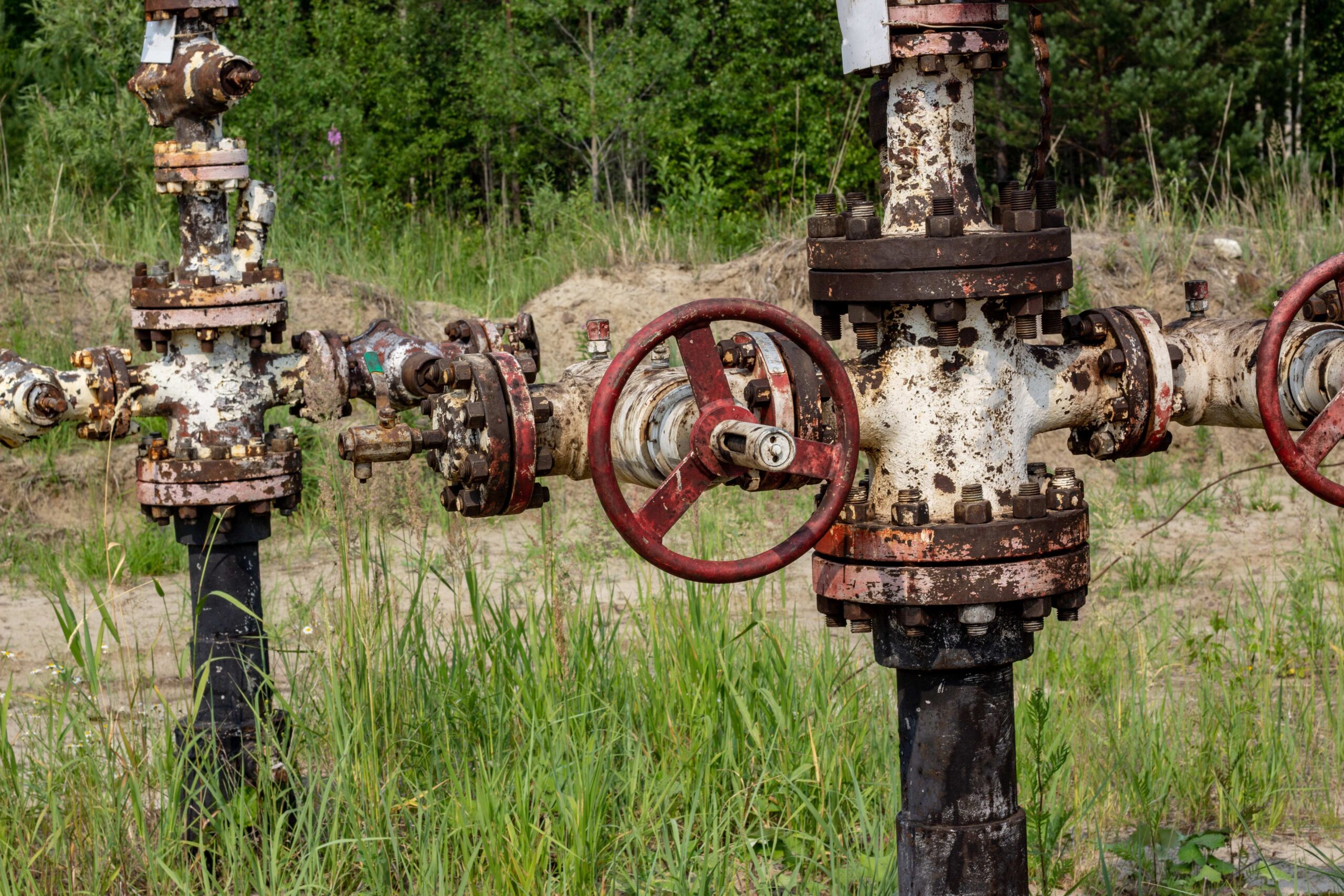
When published in May 2023, the ACR Plugging Orphaned Oil and Gas Wells Methodology (version 1.0) (“OOG Methodology”) was the world’s first focused on plugging orphaned oil and gas (OOG) wells in the United States and Canada. In the U.S. alone, the Environmental Protection Agency estimates methane emissions from abandoned wells (of which orphaned wells are a subset) to be at least 7 million metric tons of CO2 equivalent annually, which is likely an underestimate. Over 120,000 orphaned wells have been documented across 30 states in the U.S., and estimates of additional undocumented orphaned wells range as high as several million across the country.
The OOG Methodology is a high priority for ACR given the number of OOG wells, their negative social and environmental impacts, and the woefully inadequate funding available to plug them. The OOG Methodology has already delivered significant carbon market finance to address the crisis and meaningful climate impact through the reduction of methane emissions.
In its normal course of business ACR regularly inactivates and updates its methodologies to incorporate new data and lessons from implementation. Effective May 9, 2025, ACR has made version 1.0 of the OOG Methodology inactive to update requirements to ensure consistent and appropriate application across diverse project sites and wells and to avoid delays in verification.
ACR will work with trusted partners and industry experts to update the OOG Methodology to version 2.0 following ACR’s methodology update process, which includes a public comment period and scientific peer review. Publication of an updated version is planned for 2026. The collective experience from over two years of project development, implementation, validation, verification, and credit issuance across a broad OOG landscape provides valuable insights to ensure the OOG Methodology can be scaled to realize its full potential and ongoing climate impact.
The OOG Methodology update does not impact projects that have already been verified or credits that have already been issued. In addition, projects that have approved Methane Measurement Method Approval Forms (MMMAFs) may complete the verification process under version 1.0 of the OOG Methodology.
ACR will continue to accept new project listings until publication of the updated version. New projects, as well as currently listed projects that do not have an approved MMMAF, must be validated and verified for conformance with the updated version 2.0 of the OOG Methodology.
ACR and ART Announce Transition to New Next-Generation Registry Platform

ICE Plans Mid-2026 Launch of Environmental Registry Services to Bring State-of-the-Art Infrastructure to Carbon Markets
ATLANTA — Intercontinental Exchange, Inc. (NYSE:ICE), a leading global provider of technology and data, and the world’s largest operator of environmental derivatives markets, today announced plans to launch an environmental registry technology service to bring best in class infrastructure to registries and registry users and support the adoption of carbon credits as an asset class. ICE’s service, called ICE GreenTrace™, is expected to launch in the late spring of 2026 and is designed to support registries and registry users across the life cycle of a carbon credit.
Launch partner, Winrock International’s Environmental Resources Trust (ERT), will use ICE’s registry technology service for its world-leading crediting programs: ACR, the Architecture for REDD+ Transactions (ART) and the new sectoral crediting standard in development for the Energy Transition Accelerator (ETA).
ERT launched ACR, formerly the American Carbon Registry, in 1996 as the world’s first private greenhouse gas registry. ART was established in 2018 as the first market-based initiative to incentivize the protection and restoration of tropical forests at scale, also known as jurisdictional REDD+. ERT was selected in 2023 by the ETA Founding Partners to develop and pilot the carbon crediting standard for the ETA to accelerate a clean power transition in emerging and developing economies.
“The ICE registry platform is a leap forward for the technology infrastructure underpinning global carbon markets, providing powerful next-generation digital functionality to all registry users to enhance efficiency and market integration,” said Mary Grady, CEO of Environmental Resources Trust. “Bringing nearly 30 years of carbon market experience to our role as ICE’s launch partner, we are excited to join forces with an industry leader to deliver a transformational platform that supports the market growth required to achieve global climate goals.”
“Building on more than two decades of expertise in analogue to digital transformations across multiple asset classes, ICE now plans to deliver mission-critical infrastructure to the carbon credit market. We selected ERT as our launch partner based on their reputation for excellence, longstanding support of carbon markets, and commitment to a market infrastructure transformation,” said Gordon Bennett, Global Head of Environmental Markets at ICE. “ICE’s technology will bring unparalleled financial market infrastructure to allow customers to more confidently invest in and manage carbon assets at a time when transparency and trust are vital for scaling carbon credit markets.”
Since its inception, ICE has built a global digital network connecting energy and environmental market participants to the tools needed to mitigate risk, achieve compliance, and invest, all within a secure, highly regulated, and transparent operational framework. Today, ICE is home to the most liquid venues in the world to trade energy and environmental derivatives. In 2024, a record 20.4 million environmental contracts traded on ICE, equivalent to over $1 trillion in notional value for the fourth consecutive year with more than $50 billion physically delivered to multiple registries.
To find out more information about ICE’s environmental registry services or to be kept updated on progress, please contact GreenTrace@ICE.com.
About Intercontinental Exchange
Intercontinental Exchange, Inc. (NYSE: ICE) is a Fortune 500 company that designs, builds and operates digital networks that connect people to opportunity. We provide financial technology and data services across major asset classes helping our customers access mission-critical workflow tools that increase transparency and efficiency. ICE’s futures, equity, and options exchanges – including the New York Stock Exchange – and clearing houses help people invest, raise capital and manage risk. We offer some of the world’s largest markets to trade and clear energy and environmental products. Our fixed income, data services and execution capabilities provide information, analytics and platforms that help our customers streamline processes and capitalize on opportunities. At ICE Mortgage Technology, we are transforming U.S. housing finance, from initial consumer engagement through loan production, closing, registration and the long-term servicing relationship. Together, ICE transforms, streamlines and automates industries to connect our customers to opportunity.
Trademarks of ICE and/or its affiliates include Intercontinental Exchange, ICE, ICE block design, NYSE and New York Stock Exchange. Information regarding additional trademarks and intellectual property rights of Intercontinental Exchange, Inc. and/or its affiliates is located here. Key Information Documents for certain products covered by the EU Packaged Retail and Insurance-based Investment Products Regulation can be accessed on the relevant exchange website under the heading “Key Information Documents (KIDS).”
Safe Harbor Statement under the Private Securities Litigation Reform Act of 1995 – Statements in this press release regarding ICE’s business that are not historical facts are “forward-looking statements” that involve risks and uncertainties. For a discussion of additional risks and uncertainties, which could cause actual results to differ from those contained in the forward-looking statements, see ICE’s Securities and Exchange Commission (SEC) filings, including, but not limited to, the risk factors in ICE’s Annual Report on Form 10-K for the year ended December 31, 2023, as filed with the SEC on February 8, 2024.
About Environmental Resources Trust
Environmental Resources Trust (ERT), a nonprofit enterprise of Winrock International, offers trusted solutions to environmental markets to catalyze transformational climate impacts. With the mission of harnessing the power of markets to improve the environment, ERT operates internationally recognized carbon crediting programs, ACR and the Architecture for REDD+ Transactions (ART). Founded in 1996 as the world’s first private carbon registry, ACR has extensive operational experience in global compliance and voluntary carbon markets, having issued over 300 million high-quality, verified CO2 emission reduction and removals credits. ART is the leading global carbon market initiative for jurisdictional REDD+, ensuring the social and environmental integrity of climate results from protecting and restoring forests at scale. ART’s growing pipeline of participating jurisdictions currently includes over two dozen governments on five continents covering 400 million hectares of tropical forests. ERT is also developing the sectoral carbon crediting standard for the Energy Transition Accelerator (ETA), with the goal of incentivizing steeper and more rapid decarbonization of the electric power sector in emerging and developing economies. The ETA is an innovative carbon finance platform launched in 2023 by the U.S. Department of State, Bezos Earth Fund and the Rockefeller Foundation.
Updates to ACR’s Improved Forest Management Methodology

ACR’s IFM version 2.1 is fundamentally the same workable approach that has been applied to millions of acres of forest across the U.S. and Canada, with enhanced requirements for rigor and precision.
ACR recently developed a new blog post to focus on a few of the core innovations in the updated methodology, in particular Project-Specific Dynamic Baselines. The updated approach uses information from the project area to set a precise and conservative carbon crediting baseline, which requires projects to reassess and update baselines as necessary prior to each credit issuance. Read more.
ACR hosted a webinar about the innovations in IFM version 2.1 on September 19, 2024. Watch it here.
Policy Update: Methodologies Related to ACR ODS Projects in Canada

In April 2024, ACR issued a policy update for ACR’s Methodology for the Quantification, Monitoring, Reporting and Verification of Greenhouse Gas (GHG) Emission Reductions from the Destruction of Ozone Depleting Substances (ODS) and High-Global Warming Potential (GWP) Foam (v. 2.0) (ODS Methodology), suspending all activities related to Canadian ODS destruction projects. ACR staff investigated the regulatory additionality of ODS projects in Canada considering Environment and Climate Change Canada’s (ECCC) Reducing Greenhouse Gas Emissions from Refrigeration Systems Protocol, Halocarbon Refrigerants Pollution Prevention Plan Notice, and Ozone-Depleting Substances and Halocarbon Alternatives Regulations. ACR has concluded the investigation and, per the details below, determined that regulatory additionality for ACR’s ODS Methodology remains intact. Effective immediately, ACR is resuming activities related to these projects.
Reducing Greenhouse Gas Emissions from Refrigeration Systems (RGGERS) (version 1.1) RGGERS offset protocol v. 1.1 was published in December 2023 and is part of Canada’s GHG Offset Credit System established under Part 2 of the GHG Pollution Pricing Act. The protocol allows for generation of carbon credits when an existing commercial or industrial refrigeration or air-conditioning system recovers and either reclaims or destroys high-GWP refrigerants and replaces them with eligible refrigerants, among other provisions. ODS refrigerants, including chlorofluorocarbons (CFCs) and hydrochlorofluorocarbons (HCFCs), are explicitly excluded from credit generation under the RGGERS protocol. In response to ACR staff’s inquiry regarding why ODS refrigerants are excluded, ECCC staff responded as follows:
“GHG emissions reductions under the Reducing Greenhouse Gas Emissions from Refrigeration Systems (RGGERS) protocol cannot be generated from destroying, reducing or replacing ozone depleting substances (ODS), such as CFCs and HCFCs, because these are not GHGs listed in Schedule 3 of the [Greenhouse Gas Pollution Pricing] Act. ODS are covered by the Montreal Protocol and are not reported in Canada’s National Inventory Report.”
Carbon credits issued for the destruction of ODS refrigerants in Canada under ACR’s ODS Methodology remain additional despite the exclusion from the RGGERS protocol because the exclusion of ODS under RGGERS is an accounting choice, not a determination of regulatory additionality.
Halocarbon Refrigerants Pollution Prevention Plan Notice (Notice) This Notice, which was published on May 21, 2016, is under the Canadian Environmental Protection Act (1999). It requires manufacturers, reclaimers, and importers of CFC, HCFC, and hydrofluorocarbon (HFC) refrigerants to develop a pollution prevention plan to “manage halocarbon refrigerants in an environmentally sound manner in order to minimize the release of halocarbons into the environment,” and to join or develop a refrigerant stewardship program. Each stewardship program (of which Refrigerant Management Canada is the largest) must do the following, among other requirements:
- “develop annual targets (for calendar years) of halocarbon refrigerants recovered in Canada that are accepted in the stewardship program in order to be reclaimed or destroyed” (emphasis added), and
- “establish criteria to decide when a halocarbon refrigerant accepted in the stewardship program can be reclaimed, or when a halocarbon refrigerant must be destroyed.”
The Notice, which is administered by ECCC, does not include any mention of ECCC review and approval of these targets, criteria, or any other parts of the pollution prevention plans. Moreover, it does not include any requirement to meet recovery targets and does not include destruction- or reclamation-specific targets. Refrigerant Management Canada (RMC) criteria (from a 2017 implementation declaration) for determining what can be reclaimed versus what must be destroyed shows that they favor reclamation:
“the Collection Service Provider will determine if the refrigerant is to be reclaimed or destroyed … The exception to this specification is if the RMC tag/proprietary tracking system or customer states that they want the refrigerant destroyed, the Collection Service Provider will place the refrigerant in the program, regardless of whether the refrigerant can be reclaimed.”
Carbon credits issued for the destruction of ODS refrigerants in Canada under ACR’s ODS Methodology remain additional subsequent to the Notice because it does not include any requirement to meet refrigerant recovery targets, does not require destruction of any specific volume of refrigerants, and because refrigerant stewardship programs have broad authority to choose whether to reclaim (versus destroy) refrigerants.
Ozone-Depleting Substances and Halocarbon Alternatives Regulations (ODSHAR) ODSHAR is a federal regulation under the Canadian Environmental Protection Act (1999) that was first published on March 21, 2015, and last amended on August 23, 2020. ODSHAR sets out rules concerning ODS, products containing ODS, and halocarbon alternatives to implement Canada’s obligations under the Montreal Protocol, including the Kigali Amendment. ODSHAR does not require the destruction of refrigerant ODS, but instead dictates the allowed possible fates of these refrigerants (e.g., reclamation, destruction, feedstock, limited uses).
Carbon credits issued for the destruction of ODS refrigerants in Canada under ACR’s ODS Methodology remain additional subsequent to ODSHAR because it does not require destruction of ODS.
ACR Adds Precision to Evaluation of Baselines in Update to IFM Methodology

Changes enhance specificity and ensure baselines adapt to dynamic forces in forest management
In an update to its Improved Forest Management (IFM) on Non-Federal U.S. Forestlands methodology, ACR has increased the precision of its requirements for developing and evaluating conservative baseline scenarios. The methodology provides assurance of the climate impact of forest management practices across the full range of organizations using the ACR methodology, from investment management organizations to conservation NGOs.
The Methodology for the Quantification, Monitoring, Reporting and Verification of Greenhouse Gas Emission Reductions and Removals from Improved Forest Management on Non-Federal U.S. Forestlands (Version 2.1) includes the following key updates:
- A new tool for evaluating baselines each reporting period, before carbon credits are issued, to ensure the underlying assumptions remain valid over time.
- A new baseline constraint, “Harvest Intensity,” that sets maximum baseline harvest levels based on one of three options: using a new tool for recently observed harvests on comparable properties, a qualified forest management plan, or a conservative removals-only baseline.
- Greater specificity in existing requirements for baseline development related to the evaluation of legality, site accessibility and operability, regional timber market capacity, third-party approval (such as for lands with easements that may require approval from the easement holder for plans) and silvicultural practices.
“The updates to ACR’s Improved Forest Management methodology respond to market demands for rigorous and dynamic evaluation of project impact,” said Dr. Kurt Krapfl, Director of Forestry at ACR. “They further ensure emission reductions and removals reflect changes in timber market and forest management conditions over time.”
ACR’s IFM methodology is used by projects covering nearly 2.4 million acres of U.S. forestland. To date, nearly 24 million credits have been issued to projects using the methodology. Version 2.1 introduces innovative concepts, building on the success of earlier versions of the methodology. In the updates, ACR balanced demands for precision and market-relevant information with an understanding that project developers and investors require predictability to make investment decisions about voluntary, market-driven climate action. ACR plans to adapt the tools to broaden their applicability as an option for projects developed under other ACR methodologies and previous versions of this ACR IFM methodology.
With the updated methodology, ACR also introduced two new tools – ACR Improved Forest Management Methodologies Tool for Comparable Properties Analysis and ACR Improved Forest Management Methodologies Tool for Dynamic Evaluation of Baselines – that contribute to the precision of baseline scenario development and provide practical guidance on how to carry out the dynamic evaluations based on observed conditions.
The methodology update was authored by ACR with contributions from Anew Climate. The methodology was originally developed by Finite Carbon, and significantly expanded by Matt Delaney and David Ford of L&C Carbon and Greg Latta of University of Idaho. Additional version updates are attributed to Bluesource, L&C Carbon, TerraCarbon, and ACR.
For more information, visit https://acrcarbon.org/methodology/improved-forest-management-ifm-on-non-federal-u-s-forestlands/.
ACR Earns Program-Level Core Carbon Principle (CCP) Approval from the Integrity Council for the Voluntary Carbon Market (ICVCM)

ACR is pleased to announce that the Governing Board of the Integrity Council for the Voluntary Carbon Market (ICVCM) has approved ACR at the program level as “Core Carbon Principles (CCP) Eligible.”
This announcement represents the first step in the ICVCM process. It means that ACR will be able to label CCP-Approved carbon credits from CCP-Approved Categories of carbon credits as those approvals are earned in the next step of assessment.
“We appreciate this recognition of the rigor of our program and will continue to engage constructively with ICVCM to defend best practices in a world that is demanding not only carbon market integrity, but also inclusivity and urgency,” said Mary Grady, ACR’s Executive Director. “ACR’s mission is to create confidence in the integrity of carbon markets; to that end, ICVCM offers a pathway to harmonize standards around a global benchmark of quality. ACR will continue to bring our expertise and experience to the table by participating on the governing board and expert working groups.”
Since its founding in 1996 as the world’s first private greenhouse gas registry, ACR has innovated and operationalized key elements of carbon credit quality assurance, including scientific peer-reviewed accounting methodologies and well-accepted approaches to address additionality, leakage, and reversal risk mitigation; oversight of independent third-party verification; and operation of a transparent registry for the issuance and tracking of serialized credits.
ACR’s approach to program quality has earned approval to issue credits for use in regulated carbon markets, including the State of California’s Cap-and-Trade Program, the International Civil Aviation Organization’s (ICAO) Carbon Offsetting and Reduction Scheme for International Aviation (CORSIA), the State of Washington’s Cap-and-Invest Program, and towards compliance with Singapore’s Carbon Pricing Act.
To become approved as meeting CCP requirements, ACR submitted an extensive application to ICVCM for assessment. We provided evidence of being a CORSIA Eligible Emissions Unit Program, in addition to meeting the CCP’s additional criteria around effective governance, credit tracking, transparency, and robust, independent third-party validation and verification.
While ACR views this as an important step forward, we remain focused on earning CCP-Approved labels for our portfolio of carbon credits, which includes emission reductions and removals from industrial and nature-based solutions. In addition, ACR’s sister organization – the Architecture for REDD+ Transactions (ART) – looks forward to earning program-level and category-level approval from ICVCM. Ultimately, ACR expects that other leading carbon crediting programs will earn ICVCM approval, to provide confidence to buyers in credit quality and allow finance to flow to impactful climate solutions to support the goals of the Paris Agreement. The urgency of climate change demands nothing less.
###
World’s First Carbon Credits Issued for Plugging Orphaned Oil and Gas Wells
Rebellion Energy Solutions uses ACR methodology to finance climate action and restore tallgrass prairie in Oklahoma
LITTLE LITTLE ROCK, Ark. – ACR, an enterprise of Winrock International, announced today the first issuance of carbon credits from plugging orphaned oil and gas wells. Women-led Rebellion Energy Solutions generated the credits by plugging six orphaned wells in its Oklahoma Heartland Methane Abatement & Land Restoration Project. In 2023, ACR published the world’s first methodology to leverage carbon markets to finance the plugging of orphaned oil and gas wells in the United States and Canada. This is the first project to be issued credits under the methodology.
While oil and gas operators are required to plug wells at the end of their productive lives, more than 160 years of oil and gas operations has left a legacy of a huge number of orphaned wells in the United States and Canada, for which no operator exists.
Although the exact number of orphaned and abandoned oil and gas wells in the United States is unknown, the U.S. Environmental Protection Agency (EPA) estimates there may be 3.7 million across the country. Many of these wells are leaking methane, a potent greenhouse gas accounting for 12% of all U.S. emissions and approximately one-third of global warming to date. Orphaned wells can also negatively impact water quality and soil health, among other problems. Responsibility for plugging orphaned wells falls to states, federal agencies and Native American tribes, which lack the funding needed to address the problem in a meaningful way.
$4.7 billion in funding was made available through the REGROW Act (part of the 2021 Infrastructure Investment and Jobs Act). Yet, a Columbia University report estimates that the cost of plugging 500,000 wells – approximately 15% of the EPA estimate of orphaned and abandoned wells in the U.S. alone – could be as high as $24 billion. Carbon markets can provide financial incentives that complement other private, philanthropic, state and government-led initiatives, reducing greenhouse gas emissions more quickly.
“This first-of-its-kind issuance is a powerful example of the positive impacts of carbon markets to reduce potent, fast-acting, short-lived climate pollutants such as methane,” said Maris Densmore, Director of the Industrial Program at ACR. “The Heartland project also demonstrates the added environmental co-benefits of addressing water and soil pollution and removing safety hazards that prevent land from being used for recreation and other productive purposes for communities living nearby.”
ACR requires project developers to report contributions to the United Nations Sustainable Development Goals. In the case of the Heartland Project, benefits include improvements to rangeland production, health improvements for people living nearby, reductions to water pollution, and increased land resilience, in addition to the avoided methane emissions.
The decades-old, orphaned wells, located on cattle-grazing, bluestem prairie-grass ranches in Oklahoma, have no operator. Prior to being plugged, the wells leaked not only methane, but also oil into adjacent ponds and posed health risks to the families and livestock living nearby. In addition to plugging the wells, Rebellion Energy has also reclaimed the land, including native plants to help restore the prairie ecosystem.
“Rebellion’s Heartland Project was ideally positioned to become the first methane-abatement project to issue credits based on ACR’s new methodology,” said Staci Taruscio, Chief Executive Officer of Rebellion Energy Solutions. “By employing the economic incentive of carbon markets and our oil-and-gas expertise, we have a sustainable platform for environmental benefit, investment, and job creation.”
While the EPA issued new rules recently for oil and gas operations to reduce methane emissions, and the U.S. Government committed to the Global Methane Pledge at the COP28 Climate Summit, the funding gap continues.
The Heartland Project generated 80,782 carbon credits based on independently verified measurements of the methane leaking into the atmosphere from the six wells before they were plugged.