
News Category: Program Announcements
Application Window Open for the Hunter Parks Conservation Fellowship at ACR


LITTLE ROCK, Arkansas, April 20, 2023 – American Carbon Registry (ACR), a nonprofit enterprise of Winrock International, announces the opening of the application window for candidates for the Hunter Parks Conservation Fellowship at ACR. The Fellowship, established jointly with Green Assets in remembrance of the organizations’ business colleague, founder, and dear friend, was announced last month and to advance Hunter’s conservation vision.
The two-year Fellowship will be awarded to a recent forestry graduate on a competitive basis. The Fellow will engage on a day-to-day basis with forestry and carbon market experts in the evaluation of forest carbon project design and implementation to support the ongoing work to harness the power of carbon markets to conserve, sustainably manage and restore forestlands across the U.S.
Hunter founded Green Assets Inc., a forest carbon project development firm, in 2009 with the goal of providing landowners the opportunity to bring environmental and economic value to their property through conservation projects. Hunter’s absolute passion for conservation was evident in everything he did. As a landowner himself, he learned by doing and aimed to ensure that other landowners interested in tapping carbon markets for conservation finance had a trustworthy partner. The company’s mission is summed up by its motto of ‘Landowners working with Landowners.’ Following Hunter’s vision, the organization guides the development of projects, programs, and methodologies to meet the goals of landowners, while establishing a foundation of integrity in the marketplace.
The Hunter Parks Fellowship at ACR aims to continue to provide opportunity for growth in the forest carbon space by selecting a candidate who embodies Hunter’s passion for conservation, of exploring the unknown, and ensuring landowners get a fair, sustainable deal when participating in the carbon market, while promoting quality and integrity.
To read more about the Fellowship and to apply for consideration, please visit Winrock’s job site: https://grnh.se/db6d7aad2us
ACR Approved by ICAO Council for 2024-2026 Compliance Period

ACR — together with fellow Winrock enterprise Architecture for REDD+ Transactions (ART) — are the first two crediting programs approved to supply credits for first phase of CORSIA.
LITTLE ROCK, March 31, 2023 – The International Civil Aviation Organization (ICAO) Council, the UN’s main aviation body, has approved the American Carbon Registry (ACR) to supply carbon credits for the first phase of CORSIA, which commences in 2024.
Earlier this week, ACR was notified by the ICAO Council that it had been approved to supply CORSIA-eligible emissions units for the 2024-2026 compliance period. Eligible credits include those issued to activities that started their first crediting period on or after January 1, 2016 and that represent emissions reductions that occurred from January 2021 through December 2026.
ACR is once again one of the first crediting programs to receive approval to supply credits for a new phase of CORSIA. In this case, it is one of the first two crediting programs to receive approval for the 2024-2026 compliance period, the other being the Architecture for REDD+ Transactions (ART); both are enterprises of Winrock International. In 2021, ACR and ART were the first crediting programmes to be approved to offer post-2020 vintage credits for CORSIA’s 2021-2023 pilot phase.
“We are proud that ACR has once again successfully completed a thorough review of our program requirements and oversight,” said Mary Grady, Executive Director of ACR. “Ensuring carbon market integrity is paramount to our mission, and this this approval reflects our commitment to ensure our procedures continue to improve and evolve in line with Paris Agreement rules alongside increased scrutiny, oversight and guidance in the marketplace.”
ICAO is a specialized agency of the United Nations that manages the standards that govern international aviation. In 2016, ICAO approved the Carbon Offsetting and Reduction Scheme for International Aviation (CORSIA) as a global market-based mechanism to achieve carbon-neutral growth in international aviation starting in 2020. CORSIA is expected to reduce or offset between 2.5 and 4 billion tons of CO2-e through 2035.
Initially approved by ICAO in 2020 to supply eligible pre-2020 ACR-issued credits for the 2021-2023 pilot phase, ICAO expanded ACR’s eligibility in 2021 to supply post-2020 credits for use in the pilot phase. This updated approval for Paris Agreement-aligned credits, which ACR was the first to receive, was based on ACR’s ability to demonstrate that it would ensure avoidance of double counting of credits used for CORSIA with mitigation targets under the Paris Agreement. In the context of climate change mitigation, double counting describes situations where a single greenhouse gas emission reduction or removal is used more than once to demonstrate compliance with mitigation targets.
This latest approval for CORSIA’s first phase comes alongside the release by the Integrity Council for the Voluntary Carbon Market (ICVCM) of its Core Carbon Principles (CCPs), a set of fundamental principles for high-quality carbon credits. ICVCM’s requirements for crediting programs, such as ACR, have been streamlined for ICAO-approved programs to build on existing CORSIA requirements, with additional criteria around effective governance, credit tracking, transparency and robust, independent third-party validation and verification.
“ACR looks forward to continuing to be at the vanguard of market innovation and impact, and to working with the broad range of stakeholders who share our desire to create confidence in the environmental and scientific integrity of high quality carbon credits in order to accelerate transformational climate action,” Grady said.
ACR Approved as Offset Project Registry (OPR) for the State of Washington's Cap-and-Invest Program
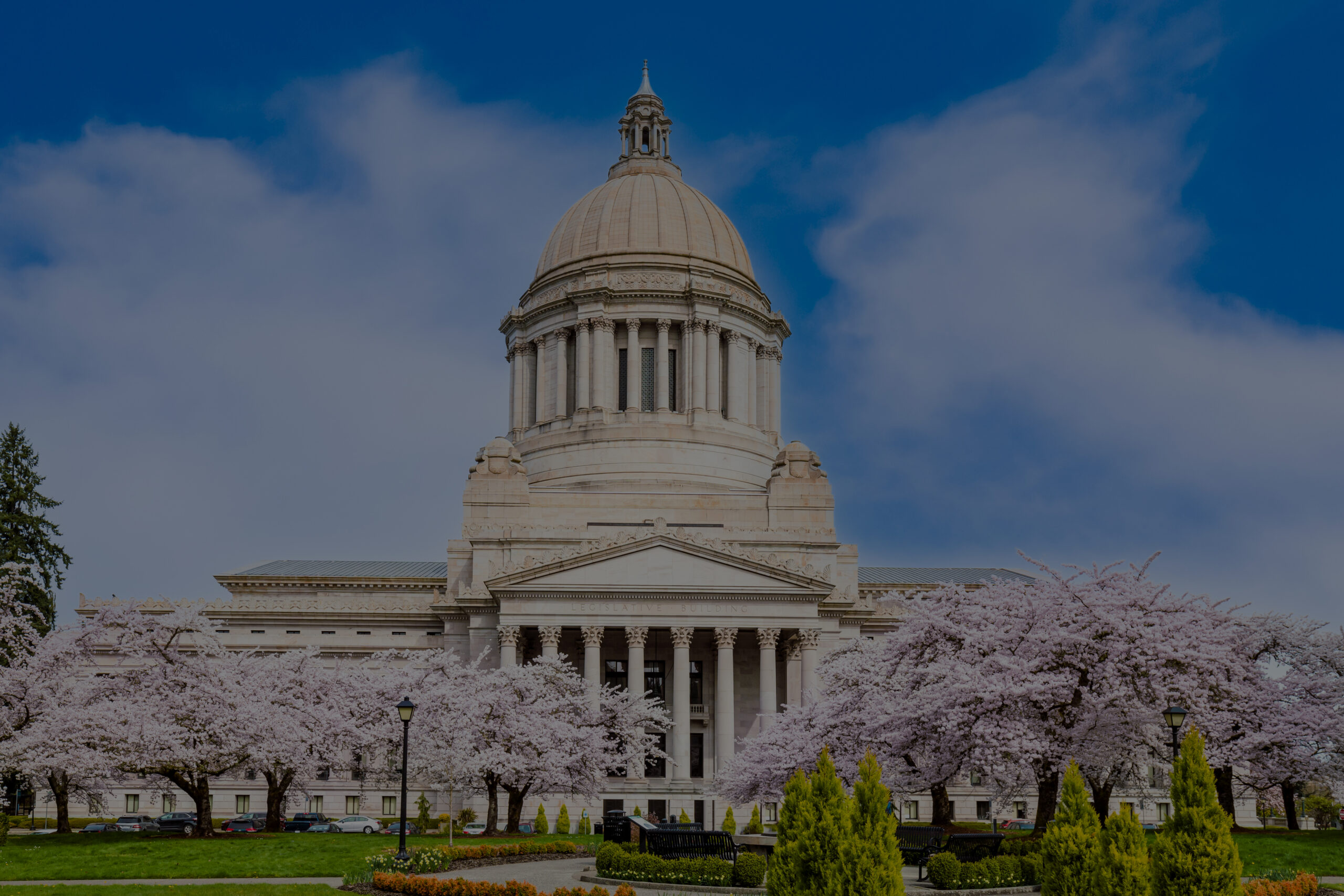
LITTLE ROCK, Arkansas March 27, 2023 – The American Carbon Registry (ACR), a nonprofit enterprise of Winrock International, has been approved as one of the first Offset Project Registries (OPRs) for the State of Washington’s Cap-and-Invest Program.
The program sets a limit, or cap, on overall carbon emissions in the state and requires businesses to obtain allowances equal to their covered greenhouse gas emissions. In the first compliance period, 2023-2026, participating entities can cover up to 5% of their emissions with carbon credits, and can cover an additional 3% with credits from projects on federally recognized Tribal lands.
As an OPR, ACR will work with Washington’s Department of Ecology to oversee the listing and verification of carbon offset projects developed following the Department’s approved offset protocols. ACR-issued Registry Offset Credits are then eligible to be converted to Ecology Offset Credits that may be used by capped entities to meet a portion of emissions reduction obligations under the Cap-and-Invest Program.
“We are thrilled to support Washington State’s Cap-and Invest Program, which is designed to reduce climate pollution and help the state meet its climate goals. The approval signals that we have met stringent regulatory requirements including technical expertise in carbon offset protocols; extensive experience in the oversight of offset project listing, registration, independent third-party verification; the issuance of serialized credits on a transparent registry; and a solid understanding of the regulation underpinning the compliance offset program,” said Mary Grady, Executive Director of ACR.
This follows an announcement last month that ACR has signed a Memorandum of Understanding (MoU) with the National Environment Agency (NEA) of the Government of Singapore that will allow Singaporean companies to use ACR-issued carbon credits to offset up to 5% of their taxable emissions starting in 2024. ACR has also served as the leading approved OPR in California’s Cap-and-Trade Program since 2012.
“ACR, which has a long tradition of supporting ambitious climate results, is pleased to be working with federal and state governments around the world that are leading efforts to explore that role that carbon credits can and should play within compliance regimes in support of catalyzing well-functioning carbon markets,” Grady said.
2022 ACR Updates
Major 2022 ACR Program Updates
ACR has linked with AirCarbon Exchange (ACX)
ACR Account Holders can now list Emission Reduction Tons (ERTs) for sale on AirCarbon Exchange (ACX). Through this partnership, ACR Account Holders can offer ERTs on ACX’s Auctions platform and also facilitate back-to-back Over-the-Counter (OTC) ERT transactions through ACX.
Launch of updated Methodology for Improved Forest Management (IFM) on Non-Federal U.S. Forestlands
ACR has revised our Improved Forest Management (IFM) on Non-Federal U.S. Forestlands methodology to include further additionality safeguards; increased reporting requirements; further specificity in project accounting, modeling, and verification; and specific accounting of IFM “removals” credits.
ACR Launches Innovative Registry Infrastructure for Removal Credits
ACR is the first registry that has implemented functionality to label credits verified as “removals” for project types including afforestation/reforestation (A/R), Improved Forest Management (IFM) and Carbon Capture and Storage (CCS). Now IFM and CCS projects can generate both emission reductions and removals to distinguish between the two upon credit issuance.
ACR to lead $20M USDA climate-smart agriculture commodities and markets project
The U.S. Department of Agriculture (USDA) has chosen Winrock International and ACR to implement a $20 million project supporting farmers and ranchers to adopt climate-smart practices and capitalize on their climate value by certifying and monetizing results in commodity markets.
ACR AT COP27
Article 6 and The Voluntary Carbon Market: Tools To Deliver NDCs and Increase Ambition At COP27, ACR’s Executive Director, Mary Grady moderated an event on the intersection of Article 6 and the voluntary carbon market in front of a packed house. She helped lead a fascinating discussion around integrity, transparency, and clarity that touched on how governments are considering the application of corresponding adjustments for voluntary carbon market transactions, and associated timelines, as well as the price premiums that may be attached to credits that carry such a corresponding adjustment. Recent Trends In U.S. Forest Carbon Market: Growth, Quality, and Expectations For The Future Kurt Krapfl, ACR’s Director of Forestry, moderated a panel at COP27 on the U.S. forest carbon market. Kurt was joined by Jessica Orrego from Mercuria, John McDougal from Anew, Bailey Evans from Green Assets, Inc., and Jeremy Manion from Arbor Day Foundation / Arbor Day Carbon to discuss some of the latest trends. The panel covered how opportunities are expanding to more types of land owners, including small private landowners; what constitutes quality and what to look out for; the innovations that are creating new efficiencies in the market; and what buyers are looking for in forest carbon credits, among other topics. Carbon Offsets and CCUS Mary Grady spoke on a panel hosted by the Kingdom of Bahrain on CCS, with colleagues from Latham and Watkins, Air Product and Perspectives Climate Group to discuss emerging technologies and share ACR’s perspective for how carbon markets can incentivize CCS projects that generate real, quantifiable and permanent voluntary carbon credits that accelerate a just energy transition. Getting To Net Zero: The Critical Role of Addressing Non-Co2 Gasses ACR’s Maris Tabor Densmore, Director of Engineered Solutions and Industrial Team Lead, and Megesh Tiwari, Senior Technical Manager, joined Geoffrey Gordon-Creed of Well Done Foundation and Tim Brown of Tradewater at the International Emissions Trading Association pavilion at COP27 to discuss the rapid reduction of non-CO2, high global warming potential (GWP) greenhouse gasses (GHGs).
Role of Financial Organisations and Carbon Markets In Accelerating CCS Deployment
Maris Densmore joined a COP27 panel at the International Emissions Trading Association pavilion with Guloren Turan of Global CCS Institute, Dirk Forrister of International Emissions Trading Association, Zoë Knight of HSBC and Fatih Yilmaz of KAPSARC to discuss the role of CCS in the path to net zero.
Overview of US Voluntary Carbon Market and Leading Project Types
Mary Grady joined a panel at the the International Emissions Trading Association pavilion that explored leading project types in the U.S., from both existing and emerging technologies, as well as an overview of the U.S. carbon market—including a review of supply and demand trends. Panelists discussed buyer considerations that drive purchasing decisions, including key criteria, quality, and co-benefits.
METHODOLOGY UPDATES IN 2022
2022 NEWLY APPROVED METHODOLOGIES
Improved Forest Management (IFM) on Non-Federal U.S. Forestlands 2.0
Improved Forest Management (IFM) on Small Non-Industrial Private Forestlands 1.0
Improved Forest Management (IFM) on Canadian Forestlands 1.0
Destruction of Ozone Depleting Substances and High-GWP Foam 1.2
Destruction of Ozone Depleting Substances from International Sources 1.0
IN SCIENTIFIC PEER REVIEW
Plugging Abandoned & Orphaned Oil and Gas Wells 1.0
Destruction of Ozone Depleting Substances and High-GWP Foam 2.0
Avoiding Conversion of U.S. Forests 1.0
Carbon Capture and Storage 2.0
ACR IN THE NEWS IN 2022
Here’s how to incentivize cleaning up landfills — the culprit driving one-fifth of global warming [Opinion] MarketWatch, Mary Grady and Megesh Tiwari, 31 October Blue carbon will be the next frontier of carbon crediting GreenBiz, Jesse Klein, 9 November Air-conditioner use will jump 280% in the next decades. How can we keep cool without making climate change worse? [Opinion] MarketWatch, Mary Grady, 9 August Little Rock nonprofit aims to standardize climate benefits for farmers Axios, Worth Sparkman, 19 September Carbon offsets have serious issues. Is it even possible to fix them? Fast Company, Adele Peters, 24 August Are carbon offsets a joke? A response to comedian John Oliver GreenBiz, Jim Giles and Jesse Klein, 30 August ACR emphasises additionality safeguards, carbon removals accounting in updated IFM methodology Carbon Pulse, Matt Lithgow, 13 July ACR to distinguish improved forest management projects that generate “removal” credits Carbon Pulse, Katherine Monahan, 18 April Operators May Earn and Sell Carbon Credits for the P&A of Inactive, Shut-in, or Temporarily Abandoned Wells JD Supra, Court VanTassell and Juliane Mahoney, 21 June State lands open for carbon crediting, but how good are those credits?GreenBiz, Jesse Klein, 2 MayAs disputes around logging increase, First Nations eye carbon credits as a way to generate revenue Globe and Mail, Jeffrey Jones, 19 January RESOURCES In 2022, ACR developed a series of blogs and primers to introduce some of the key challenges and opportunities in the realm of climate action that our methodologies are designed to address. In each primer, we introduce the challenge or the opportunity and explain how carbon market incentives can help unlock the solution. Carbon Capture and Storage Primer Foam Blowing Agents PrimerMethane Emissions from Landfills Primer
Ozone Depleting Substances Primer ACR Improved Forest Management (IFM): A Primer ACR Carbon Markets 101: Additionality and Baselines for Improved Forest Management Projects ACR Carbon Markets 101: High GWP PollutantsACR has linked with AirCarbon Exchange (ACX)
ACR Account Holders can now list Emission Reduction Tons (ERTs) for sale on AirCarbon Exchange (ACX). Through this partnership, ACR Account Holders can offer ERTs on ACX’s Auctions platform and also facilitate back-to-back Over-the-Counter (OTC) ERT transactions through ACX.
To access this new opportunity, ACR Account Holders can contact ACX by email or can get started through the ACX website.
This partnership between ACR and ACX expands market access for ERTs to ACX participants who may not have accounts with ACR. ACX is pleased to provide this service to ACR Account Holders and both parties look forward to continuing to broaden the offerings available to buyers and sellers in the future.
ACR Extends Stakeholder Consultation for CCS Methodology v2.0
Due to the high volume of interest in the ACR CCS methodology v2.0, ACR announces an extension of the stakeholder consultation period to November 30, 2022.
Please send comments to ACR@Winrock.org with the subject line “CCS Methodology Version 2.0 Public Comments.”
ACR Carbon Markets 101: High GWP Pollutants
By: Megesh Tiwari, Senior Technical Manager, American Carbon Registry
ACR’s Carbon Market 101 blog series explores and explains carbon markets and how ACR tackles various issues in our ongoing mission to set the bar for carbon credit quality.
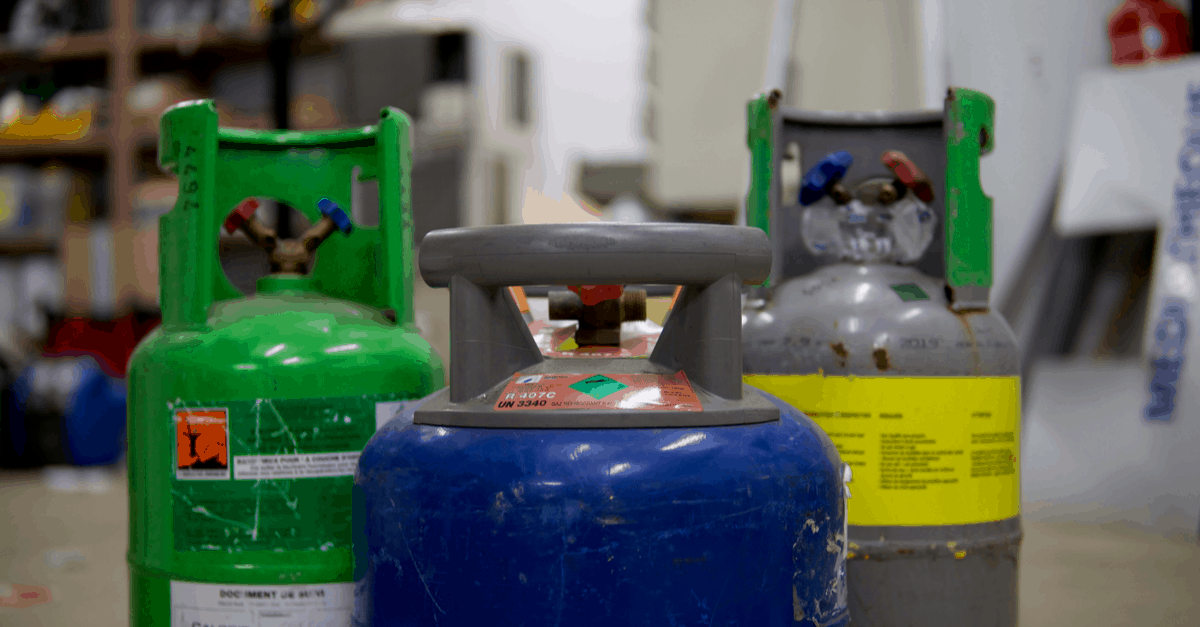
At ACR, we have a strong focus on incentivizing actions to reduce and eliminate extremely potent non-CO2 climate pollutants like methane, hydrofluorocarbons (HFCs), and ozone depleting substances (ODS) like chlorofluorocarbons (CFC) and hydrochlorofluorocarbons (HCFC). Given the potential to deliver significant climate impact, we thought it would be useful to introduce some of the central concepts associated with our innovative and industry-leading methodologies for refrigerants, foam blowing agents, ozone depleting substances, landfill emissions, and orphaned and abandoned wells.
What is Global Warming Potential?
To better understand the impact that different greenhouse gasses (GHG) have gasses have in contributing to the rise in the Earth’s temperatures, scientists established the concept of Global Warming Potential (GWP).
The GWP compares the emissions of one metric ton of different GHGs against the emissions of one metric ton of carbon dioxide (CO2) over a given period of time, most commonly over 100 years. GWP is a relative term and is calculated by dividing absolute GWP of a GHG by absolute GWP of CO2. As such, CO2 is the reference GHG with GWP value of 1. The higher the GWP value, the more it contributes to global warming. For instance, if a pollutant has a 100-year GWP value of five, it contributes to global warming at a rate of five times higher than CO2 over the period of hundred years from the date the pollutant was released into the atmosphere.
What are short-lived climate pollutants (SLCP)?
Another important distinction in comparing harmful pollutants is distinguishing short-lived GHGs from long-lived GHGs. For instance, CO2 can last for centuries in the atmosphere before breaking down, while methane, which has a high GWP, remains in the atmosphere for a much shorter period – only around a decade.
It takes 100 years for around 60-70% of the carbon dioxide to decay in the atmosphere. The rate of decay decreases over time, taking around 500 years for the additional 10% CO2 to decay and over thousands of years for all CO2 to decay. However, in the case of short-lived climate pollutants, like methane, HFCs and HCFCs, over half of the decay happens within first 20 years. In other words, these short-lived GHGs heat the atmosphere at a much higher rate in the initial years after their release, several times higher than their 100-year GWP values. For example, even though HCFC-22 (the most commonly used refrigerant in refrigeration and air conditioning) traps heat around 2,000 times more than CO2 over 100 years; but in the first 20 years, it traps heat around 5,000 times more than CO2. Because of these alarmingly high heat trapping properties, reducing emissions from these short-lived pollutants is critical for avoiding rapid warming of the planet in the short term.
Where are high GWP pollutants used?
High GWP pollutants are present in hundreds of manufacturing, industrial and agricultural processes. High GWP pollutants are often paid less attention than CO2 emissions, but they make a significant contribution in the rise of global temperatures. Global phaseout of HFCs can alone prevent 0.5C warming of the planet by 2100.
Methane, which has a GWP of between 27 and 30 over a 100-year period, is often found in agricultural production (which accounts for 23 percent of U.S. methane emissions), landfills (17 percent), and oil and natural gas operations (30 percent).
HFCs and perfluorocarbons (PFCs) – which can have GWP in the thousands – are used in a wide variety of applications, including air conditioning units, refrigerators and foam insulation.
HCFCs, which are also ODSs, were the most widely used compounds for refrigeration, air-conditioning and foam insulation before they were started to be phased out in 2020 in the US. However, many other countries have not yet begun to completely phase out use of HCFCs. And even in countries where HCFCs are being phased out, the market for recycled and reclaimed HCFCs in still huge, especially to service existing equipment. On top of this, even as old equipment gets replaced with new equipment that uses lower GWP alternatives, the remaining gas sits in stockpiles and eventually vents into the atmosphere.
What can be done to limit the use of high GWP pollutants?
Some groups of pollutants have been targeted by governments and international bodies and are strongly regulated or banned. For instance, the Montreal Protocol, which was ratified by all 198 United Nations Member States, calls for the phasing out of ODS, which are also high-GWP climate pollutants, through target dates and strong reporting measures.
But other high GWP GHGs like HFCs and methane are still present in hundreds of manufacturing, industrial and agricultural processes And while production and consumption of virgin HCFCs are banned in the US, the market for reclaimed HCFCs to service old (leaky) existing equipment is still robust.
Carbon markets can incentivize projects that remove or avoid the release of GHG emissions into the atmosphere. Revenue generated from carbon credits allows for the collection and safe destruction of these harmful pollutants, along with financing the transition to alternatives that contribute less to global warming.
For example, in the case of refrigerants, air conditioners and foam insulation, there are often low-GWP alternatives that already exist. Unfortunately, many of these alternatives are cost prohibitive and have not been widely adopted in the marketplace. Carbon markets can play a role in supporting industries to transition more quickly to low GWP alternatives.
The destruction of, and transition away from, these high GWP GHGs is irreversible, permanent and fully additional and has significant short-term impact on preventing global temperature rise. It is expected that as more companies continue to signal interest in purchasing these kind of carbon credits, the price of the credits will rise, creating more revenue for projects and catalyzing wider adoption of alternatives.
Examples of ACR methodologies focused on high-GWP, short-lived climate pollutants
Advanced Refrigeration Systems, version 2.1
Certified Reclaimed HFC Refrigerants, Propellants, and Fire Suppressants, version 2.0
Destruction of Ozone Depleting Substances and High-GWP Foam, version 1.2
Destruction of Ozone Depleting Substances from International Sources, version 1.0
Transition to Advanced Formulation Blowing Agents in Foam Manufacturing and Use, version 3.0
Capturing and Destroying Methane from Coal and Trona Mines in North America, version 1.1
Landfill Gas Destruction and Beneficial Use Projects, version 2.0
Plugging Abandoned & Orphaned Oil and Gas Wells, version 1.0 (in scientific peer review)
ACR Announces Public Comment Period for New Methodology for Avoided Conversion of U.S. Forests

Today, the American Carbon Registry (ACR) announces the launch of the public stakeholder consultation process for a new Methodology for the Quantification, Monitoring, Reporting, and Verification of Greenhouse Gas Emission Reductions and Removals from Avoided Conversion of U.S. Forests to Alternative Land Uses. The methodology was co-authored by Green Assets and ACR.
The methodology details eligibility and carbon quantification requirements for projects that forego conversion of non-federal U.S. forestlands to alternative land uses, including agriculture, mining, or development. The emission reductions are verified against a baseline of carbon stock changes that would result from conversion of the project area to the appraised highest and best use of the land, which represents the use that produces the highest value for the property. Additionality is assured by a legal commitment to retain the project area as forestland, such as a conservation easement specific to the carbon project.
“Each year, hundreds of thousands of acres of forests in the U.S. are converted to other land uses,” said Green Assets CEO Bailey Evans. “Carbon finance is a critical mechanism in mitigating forest loss and helping to combat climate change. Landowners face ever-changing scenarios for managing and maintaining their land, and this methodology will promote forest conservation and stewardship through an innovative mechanism for quantifying and incentivizing the benefits of forest conservation.”
Following the period of stakeholder consultation, the next phase of the methodology approval process is scientific peer review. ACR hopes to finalize the process and publish the methodology in the first quarter of 2023.
“Green Assets has been a leader in the development of the majority of California Air Resources Board’s (ARB) avoided conversion forest carbon projects in the country,” said Mary Grady, ACR Executive Director. “They have brought their extensive experience of avoided conversion projects within the regulated market to the development of this new methodology, which builds on the existing compliance protocol while broadening market access to a wider range of landowners through aggregation, as well as enhancing impact by accounting for the effects of land conversion on soil carbon loss.”
Public comments may be submitted to ACR@Winrock.org by November 7, 2022, with the subject line “AC Methodology Version 1.0 Public Comments”.