

This website uses cookies so that we can provide you with the best user experience possible. Cookie information is stored in your browser and performs functions such as recognising you when you return to our website and helping our team to understand which sections of the website you find most interesting and useful.
News Category: General
Washington State Department of Ecology Issued First Carbon Credits for State Cap-and-Invest Program
Share


ACR Oversaw Listing, Verification and Issuance of Credits to A-Gas and Tradewater
LITTLE ROCK, AR—Yesterday, the Washington State Department of Ecology – the regulatory agency responsible for the state’s compliance carbon market – issued the first Ecology Offset Credits to two carbon projects. ACR was the Offset Project Registry for the two projects, issuing the serialized Registry Offset Credits that were converted to Ecology Offset Credits.
Both projects were verified for conformance with the California Air Resources Board Compliance Offset Protocol for Ozone Depleting Substance Projects, which was adopted by the Washington State Department of Ecology to generate the Registry Offset Credits. These credits can be used by covered entities towards meeting their emission reductions obligations in Washington’s program.
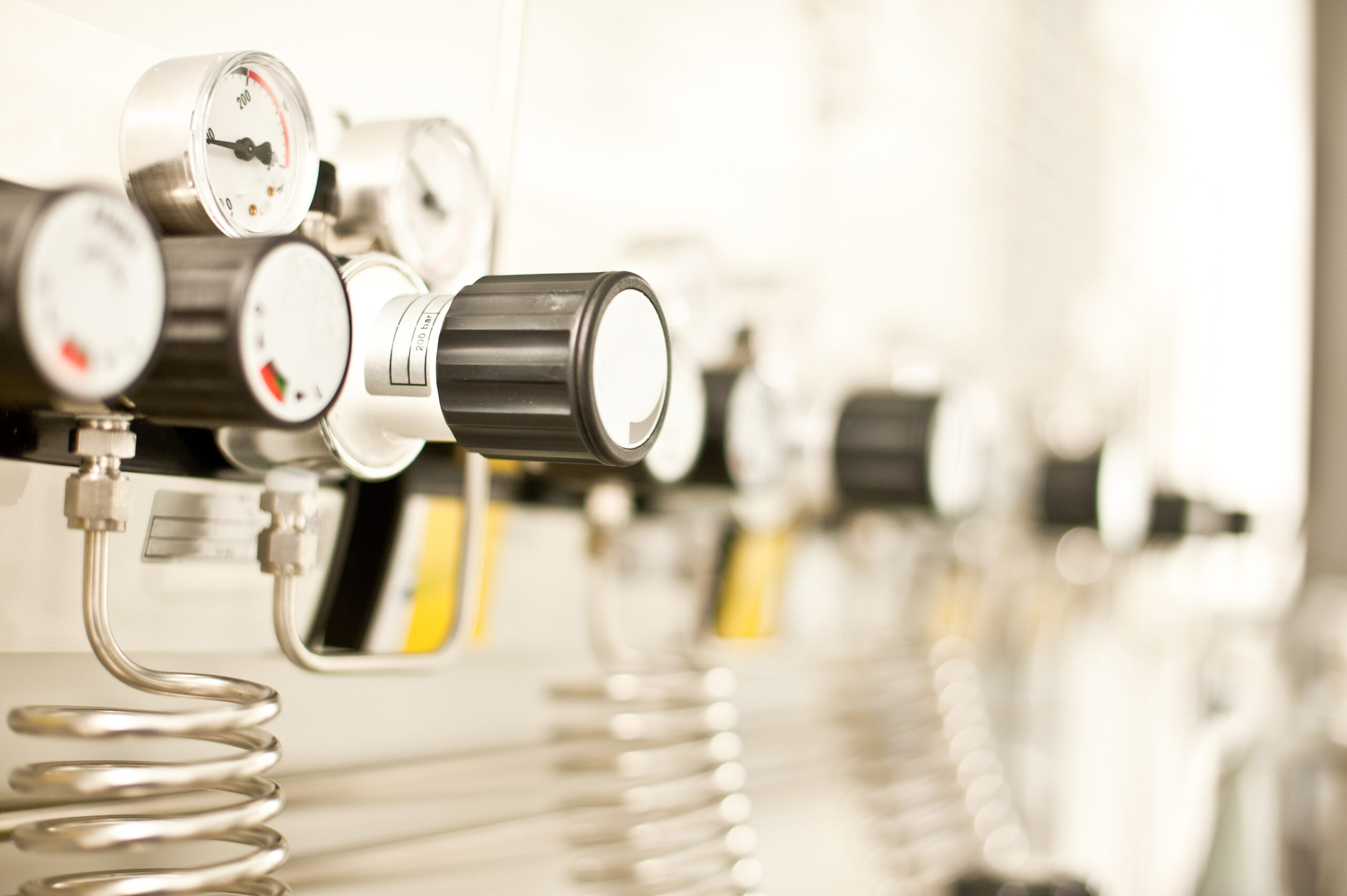
A-Gas (A-Gas 2-2023; Project ID: ACR902) and Tradewater (Tradewater ODS51; Project ID: ACR892) are the two carbon project developers who generated the Ecology Offset Credits. Each collected and destroyed refrigerants to permanently prevent the gases from contributing to climate change. Refrigerants and other ozone depleting substances are potent greenhouse gases that can warm the atmosphere 1,000 to 14,000 times more than CO2, which is why Project Drawdown ranked refrigerant management first in its 2017 list of climate solutions.
The Department of Ecology issued 109,180 Ecology Offset Credits to A-Gas and 139,956 Ecology Offset Credits to Tradewater after their project activities were independently verified by an accredited third-party verification & validation body, as overseen by ACR and Ecology.
“ACR is proud to be the first Offset Project Registry to issue carbon credits in support of the State of Washington’s commitment to climate action,” said Mary Grady, Executive Director of ACR. “Carbon markets offer the least-cost pathway to reduce greenhouse gas emissions while also supporting other priorities, such as clean air and healthy communities.”
In 2021, the Washington State Legislature passed the Climate Commitment Act, which created a market-based program (“Cap-and-Invest”) to cap and reduce greenhouse gas emissions from the state’s largest sources of pollution, such as oil refineries. Funds from the program support new investments in climate-resiliency programs, clean transportation, and addressing health disparities across the state.
In addition to the State of Washington, ACR has operated as the leading Offset Project Registry for the California Cap-and-Trade program since 2012, issuing over two-thirds of the credits used by regulated entities towards their emissions reduction requirements. The Colorado Air Quality Control Commission’s Recovered Methane Rule also names specific ACR methodologies as recovered methane protocols in that state’s program.
10 Reasons the World Needs Carbon Markets

Share
The world is not on track to meet Paris Agreement goals and current policies put us on the path for 2.7°C of warming, well beyond what climate scientists say is safe for humanity. Even if every country met its current commitments, the world would still be 24 gigatons of emissions short of meeting targets to keep warming under 1.5°C. To get back on track, we need to act now with greater urgency and ambition. Well-designed carbon markets offer an available, scalable solution for the world to take additional action right now with integrity and impact.
1) Carbon markets reduce mitigation costs and increase climate ambition.
Research from IETA and the University of Maryland found that international cooperation through carbon markets has the potential to reduce costs of meeting NDCs by $250 billion per year in 2030, increasing to $21 trillion of mitigation cost savings between 2020 and 2050. This is money that can be reinvested into higher ambition goals, which is why “83% of NDCs state the intent to make use of international market mechanisms to reduce greenhouse gas emissions.”
2) Carbon markets are essential to meet Paris Agreement goals.
As the global stocktake highlighted, the world is not on track to meet Paris Agreement goals. The UN estimates that developing countries will need up to $6 trillion by 2030 to finance less than half of their climate goals. Carbon markets offer huge potential for mobilizing private and public finance for the Global South, as recognized in Article 6 of the Paris Agreement.
3) Carbon markets make climate action a business imperative.
Companies that utilize carbon credits decarbonize faster, according to a growing body of evidence. The reason is simple: If you put a price on carbon, as markets do, you create an incentive to reduce emissions. Carbon markets also give companies the opportunity to take responsibility for their emissions today. In the climate crisis, we can no longer accept unabated emissions; markets offer a path forward.
4) Carbon markets protect threatened ecosystems.
The world is failing to stop tropical deforestation and to protect, sustainably manage and restore forests, grasslands and wetlands. Carbon finance creates one of the most significant opportunities to value these ecosystems and the critical services they provide for biodiversity, traditional livelihoods and regulating the climate.
5) Carbon markets address more than carbon dioxide.
Short-lived climate pollutants, like methane and hydrofluorocarbons, are super pollutants capable of producing up to 10,000 times the global warming potential of CO2. Reducing these pollutants in the near term could slow warming by half of a degree by 2050. Carbon finance offers a proven way to pay for destruction of super pollutants, permanently removing their ability to cause climate change or ozone depletion.
6) Carbon markets get many more people involved in climate action.
Around the world – from Indigenous communities and family woodland owners managing forests, to small businesses plugging orphaned oil and gas wells or collecting refrigerants, to entrepreneurs installing rooftop solar systems – carbon markets offer financial incentives for inclusive climate action. As United Nations Secretary-General Antonio Guterres said, we need “everything everywhere all at once.” Markets activate diverse parts of the economy and motivate new groups of people to get involved, providing opportunities for climate action at a small scale, which can add up to a big difference.
7) Carbon markets can benefit Indigenous People and local communities.
Carbon finance offers Indigenous stewards the opportunity to bring investment into their communities on their own terms. Leading standards recognize traditional tenure and there are a growing number of Indigenous project developers. From Indigenous villages in Guyana to Tribal carbon projects in the US, if done well carbon markets offer Indigenous People and local communities a seat at the table to generate benefits from the lands they manage responsibly.
8) Carbon markets generate a broad range of co-benefits.
Carbon projects create a wide array of additional benefits, such as biodiversity conservation, clean water and air, job creation, and energy access, which can be quantified to show progress towards UN Sustainable Development Goals. Reforestation projects can support biodiversity, clean water and economic development. Capping orphaned oil wells can improve air and water quality. For many people, these “co-benefits” are the primary motivation for using carbon markets to finance their work.
9) Carbon markets drive policy change.
Markets drive adoption of solutions that can then be used to set standards in new policies. And they create incentives to go beyond current regulatory requirements where they fall short. For example, there are estimated to be millions of orphaned oil and gas wells in the United States, the abandoned legacy of fossil fuel development. Carbon finance is paying to cap wells, stopping them from leaking methane into the atmosphere. Carbon markets also support the use of low-GWP foam and refrigerants, accelerating the transition where policies alone are not adequate. In doing so, carbon markets are driving awareness of the problems, refining solutions and showing policy makers where intervention may be needed.
10) Carbon markets offer models for the world to learn from.
On transparency, measurement, reporting and verification, carbon markets have already developed important strategies to help guide other climate actions, including corporate carbon action and implementation of Article 6 of the Paris Agreement. All major registries have publicly available data about projects, methodologies, and emissions reduced or avoided, built on approaches subjected to public comment and peer review. Carbon markets have decades of experience for other strategies to build upon.
ACR's Mary Grady to Join ICVCM Board
Share
Statement from ACR and ART on Mary Grady’s Appointment to ICVCM Board
Mary Grady, the Executive Director of ACR and the Architecture for REDD+ Transactions (ART), has been appointed to the governing board of the Integrity Council for the Voluntary Carbon Market (ICVCM).
ICVCM is an independent body setting thresholds for the voluntary carbon market, which is working to promote positive, scalable climate impact. The ICVCM board of directors is responsible for guiding the organization’s strategic direction, providing oversight, and making key decisions.
ACR and ART share ICVCM’s theory of change: “build integrity and scale will follow.” We will not meet the goals of the Paris Agreement without robust global carbon markets, so our collective work is central to our shared future on this planet.
On behalf of ACR and ART, Mary represents decades of experience with multiple project types in both voluntary and compliance markets and is also one of the world’s leading experts on jurisdictional approaches to carbon crediting.
Mary thanked the current ICVCM board members and leadership team for entrusting her with this important role, saying that she looks forward to working with this distinguished group during a critical point in ICVCM’s development.
“With the Core Carbon Principles launched, attention is now on providing additional clarity about the process moving forward, as well as how the initiative will operationalize high-level principles in a consistent and transparent fashion. I look forward to continuing to provide practical and actionable input to help harmonize global standards and support successful implementation,” she said.
“I will do my best to bring ACR and ART’s perspectives as organizations that implement carbon standards and manage associated market infrastructure. And I will represent the perspectives of investors and proponents of GHG projects and jurisdictional programs, who understand the real-world implications of the technical and policy choices being evaluated by ICVCM,” Mary added.
Annette Nazareth, Chair of the ICVCM Governing Board, said, “We are delighted to welcome Mary Grady as a member of our governing board. Mary brings a wealth of experience and expertise from her work with the UNFCCC, on Natural Climate Solutions as well as in the renewable energy sector. We look forward to her valuable contributions to this important phase of the Integrity Council for the Voluntary Carbon Market’s work. Our global benchmark for high integrity aims to enhance trust in the voluntary carbon market and introduce greater consistency. Our governing board’s oversight is critical to supporting the delivery of CCP labelled credits into the market to unlock much-needed private sector investment in climate solutions which would otherwise not be viable, and accelerate flows of finance to countries in the Global South to support the growth of vibrant green economies.”
-ENDS-
A Call for Urgency with Integrity at the Start of Climate Week NYC

Share
A Call for Urgency with Integrity at the Start of Climate Week NYC
By: Mary Grady, Executive Director, ACR
As Climate Week NYC begins, two principles should guide every discussion and decision: integrity and urgency.
Over the past year, carbon markets have come under intense scrutiny and many investors and corporations have decided it is safer to sit on the sidelines than to invest in climate action now.
Yet, according to the first global stocktake, “global emissions are not in line with modelled global mitigation pathways consistent with the temperature goal of the Paris Agreement.” Said less diplomatically, we need to act now with significantly greater urgency and ambition.
This requires a “both / and” mindset for the work in front of us today. We need both integrity and urgency. We need to aggressively phase out hard-to-abate emissions on a trajectory aligned with Paris Agreement targets alongside incentivizing investment in high-quality carbon credits to compensate for residual emissions. We need nature-based solutions and technological innovation. We need emission reductions and removals. We need to create confidence in the best possible projects today and continually improve methodologies.
We simply cannot afford to let our quest for integrity dampen the equally powerful need for urgency. And right now, with many valuable initiatives underway, too many parties are thinking of integrity as a destination, rather than a journey – one that ACR has been on since we launched the first greenhouse gas crediting program in the world in 1996.
Since our founding, we have continually improved our approaches, invested in new methodologies and sunset others. For example, catalyzing carbon finance to scale up grid-connected wind energy accelerated the transition in many countries and drove down costs to a point where carbon finance is no longer needed. Science develops and markets change, so our approaches continued to evolve. And through it all, we kept pushing to bring the best standards to market as quickly as possible, driven by a sense of integrity and urgency.
I agree with the Integrity Council for Voluntary Carbon Markets’ mission to “build integrity and scale will follow.” In fact, it mirrors our own mission, which is to “create confidence in the integrity of carbon markets to catalyze transformational climate results.”
Yet the stocktake’s findings underline the absolute imperative of urgency: “Action is needed to increase both the mitigation ambition of NDCs and the implementation of measures to achieve their targets.” Even if we hit all the NDCs, the analysis finds we will still fall 20-24 gigatons of CO2e shy of limiting warming to 1.5 degrees C in 2030.
Carbon markets are the single best global tool we have today to move investors off the sidelines, to bring capital to deserving projects around the world, to help raise ambitions quickly.
Integrity is central to our work at ACR. Standards are revised through stakeholder consultation on a regular basis. Projects are validated and emissions results verified by accredited parties prior to each issuance. Methodologies are continually reviewed and updated through a transparent public comment and scientific peer review process. Credits are issued as serialized units and retired on a public registry. And all of this happens before third parties use benchmarks to evaluate projects or develop ratings. We support all of this and will continue to invest the lion’s share of our work in the integrity of carbon markets.
Yet, as we embark on Climate Week NYC – and as many of us head to COP 28 later this fall – I implore us all to keep urgency in the picture. The big message of the global stocktake is that we are not moving fast enough. And when it comes to climate change, going slow is the same as failing.
Introducing Charlie Mize as First Hunter Parks Forest Conservation Fellow

Share
Today, ACR is delighted to announce Charlie Mize as the first Hunter Parks Forest Conservation Fellow. Charlie holds a Master of Science degree in Forestry from the Duke Nicholas School of the Environment and most recently has worked as a wildlife forester, performing habitat restoration in the Southeast United States. Charlie has also worked as a stewardship associate to establish forest conservation easements on thousands of acres of working forests in the Pacific Northwest, demonstrating his commitment to forest conservation.
The Hunter Parks Fellowship at ACR was established jointly with Green Assets, which Hunter founded. The purpose of the two-year Fellowship is to provide professional carbon market experience to early career scientists while also honoring a dear friend and colleague.
Welcome to the team, Charlie!
Announcing Jessica Bede as ACR’s New Managing Director

Share
May 15, 2023 – We are thrilled to announce that Jessica Bede has been appointed as Managing Director of the American Carbon Registry (ACR).
Jessica will be well known to many of our stakeholders from her role as ACR’s Director of Registry Operations, where she was responsible for the operation and client services of our critical registry infrastructure. Jessica joined ACR in 2019, and her deep understanding of our systems and processes, our stakeholders’ needs and perspectives, and the markets in which we operate make her the ideal candidate for the role. In her new position, Jessica will be responsible for providing leadership and coordination for the full suite of ACR’s technical and strategic work to drive climate action, ensure the integrity of carbon credits, and promote market innovation.
Jessica’s previous work has involved a variety of climate financing mechanisms and multiple project types, giving her a wide range of knowledge across the transportation, energy, building, natural resources, and waste sectors. Jessica joined ACR after seven years at the California Air Resources Board (CARB), where she first worked on compliance offset protocol development and credit issuance under the State’s Cap-and-Trade program and then the use of auction proceeds for California Climate Investments to further the State’s climate goals and benefit disadvantaged communities.
Prior to CARB, she worked on the technical design of Carbon Tanzania’s first REDD project, which included establishing and strengthening the land rights of Indigenous populations and delivering payments for ecosystem services to communities for development and livelihood needs.
Jessica holds a Bachelor’s in Political Science from California State Polytechnic University, Pomona and a Master’s in International Development from Brandeis University’s Heller School for Social Policy and Management.
Speaking on her new role, Jessica says, “What drew me to ACR and keeps me excited about my promotion is the opportunity to work with my colleagues – leading experts across a wide variety of sectors – to increase our climate and environmental impact. I am grateful to be surrounded by such smart and dedicated professionals with diverse expertise. Our people have created the strong foundation that exists today, upon which we will continue to build.”
We also want to recognize the incredible contribution of Lauren Nichols, our outgoing Managing Director, who joined ACR in 2008. In her 15 years of service, Lauren directly contributed to all aspects of ACR’s organizational development through progressively advanced technical, operational and management positions. She played a critical role in building ACR’s brand and global reputation including growing our team and our suite of methodologies to scale our climate impact, securing a leading role in the California compliance market and in the ICAO CORSIA, and developing and implementing three generations of ACR’s registry platform. We’re very pleased that Lauren will be staying within the ACR family in an advisory capacity as she begins her next chapter in a leadership role of a family foundation.
We’re also pleased that we have filled Jessica’s position as Director of Registry Operations and will be announcing that new appointment in the coming week.
In the meantime, please join me in congratulating Jessica on her new role, as well as thanking Lauren for her immense contribution to ACR’s ongoing work to deliver innovation and impact over the years.
Mary Grady
Executive Director, American Carbon Registry
American Carbon Registry Announces New Conservation Fellowship and Presents Carbon Market Awards at Annual Gala
Share
ANAHEIM, Calif., March 22, 2023 – The American Carbon Registry (ACR), a nonprofit enterprise of Winrock International, has announced the co-creation with Green Assets of a new conservation fellowship, in remembrance of the late Hunter Parks, to expand the technical knowledge base for harnessing the power of carbon markets for conservation finance. The announcement was made at ACR’s annual gala reception yesterday, where awards were also presented to Tradewater, the National Indian Carbon Coalition and Therm in recognition of their outstanding environmental achievements.
HUNTER PARKS CONSERVATION FELLOWSHIP
The Hunter Parks Conservation Fellowship at ACR has been established jointly with Green Assets in remembrance of the organizations’ business colleague, founder and dear friend. The two-year Fellowship will be awarded to a recent forestry graduate on a competitive basis. The Fellow will engage on a day-to-day basis with forestry and carbon market experts in the evaluation of forest carbon project design and implementation to support the ongoing work to harness the power of carbon markets to conserve, sustainably manage and restore forestlands across the U.S.
“Hunter’s absolute passion for conservation was evident in everything he did. As a landowner himself, he learned by doing and aimed to ensure that other landowners interested in tapping carbon markets for conservation finance had a trustworthy partner. The honesty and integrity that he brought to all his relationships – personal and professional – was as refreshing as his cowboy boots at a carbon conference. We are proud to honor his legacy through an ACR Fellowship in his name that advances his conservation vision,” said Mary Grady, Executive Director of ACR.
Hunter founded Green Assets Inc., a forest carbon project development firm, in 2009 with the goal of providing landowners the opportunity to bring environmental and economic value to their property through conservation projects. The company’s mission is summed up by its motto of ‘Landowners working with Landowners.’ Following Hunter’s vision, the organization guides the development of projects, programs, and methodologies to meet the goals of landowners, while establishing a foundation of integrity in the marketplace.
Green Assets CEO Bailey Evans said, “Hunter would be honored to know this Fellowship will continue to provide opportunity for growth in the forest carbon space. The idea is that the candidate will embody Hunter’s passion of exploring the unknown and ensuring landowners get a fair, sustainable deal when participating in the carbon market, while promoting quality and integrity. We look forward to our continued collaboration with ACR, and support of their endeavors to create a high-quality marketplace for landowners to participate in the forest carbon arena.”
ACR AWARDS
ACR’s organizational awards are based on its guiding principles of innovation, quality and excellence.
Tradewater was honored with the ACR Innovation Award for the co-development of ACR’s International ODS Destruction methodology. The methodology combines two key innovations. The first is allowing for the collection of CFCs – for which production and consumption are banned under the Montreal Protocol – from stockpiles in developing countries, most of which don’t have in-country eligible destruction facilities. The second is the ability to export the CFCs to another country for destruction at a TEAP compliant facility. Combined, these innovations provide access to carbon finance to fund this costly ODS collection and destruction process, which delivers very high climate impact.
In spite of Montreal Protocol’s global ban on virgin production and consumption of Chlorofluorocarbons (CFCs), tens of billions of metric tons of CO2 equivalent of CFCs continue to be recycled and reused in old leaking equipment or indefinitely stockpiled in rusting tanks around the world. Destruction of ODS is costly and there is no mandate to collect and destroy these gases. By enabling carbon credits as an innovative (and the only) sustainable mechanism to finance destruction of CFCs, even more critical in developing countries, this methodology helps prevent further global warming and ozone depletion from the reuse and stockpiling of remaining CFCs.
“We are thrilled to receive the ACR Innovation Award and are particularly pleased to work with ACR on tackling these extremely potent greenhouse gases,” said Tim Brown, CEO of Tradewater. “The International ODS Destruction Methodology validates the importance of the global nature of the work and will result in additional and permanent climate benefits. Our aim is to go after these gases all over the world to have the greatest impact we can in the fight against climate change.”
The National Indian Carbon Coalition, a nonprofit program of the Indian Land Tenure Foundation (ILTF) and the Intertribal Agriculture Council (IAC), received this year’s ACR Commitment to Quality Award for their work helping tribal nations and individual Indian landowners access carbon market finance by developing high quality carbon projects on their lands. NICC has supported four tribes register projects with ACR, including Blackfeet Nation, Mississippi Band of Choctaw Indians, Fond du Lac Band of Lake Superior Chippewa and Keeweenaw Bay Indian Community.
The carbon market provides tribes with unique opportunities to preserve tribal land ownership, protect the land for future generations, and earn income for their communities. Despite this potential, the carbon market is complex and difficult to navigate. Through its work with Native Nations, NICC creates new opportunities to reap the benefits of carbon projects on their lands, while preserving that land for future generations.
“The work we do is important for the future of tribal communities and the well-being of the planet. We’re pleased with what has been accomplished so far but there is so much more to be done,” said Bryan Van Stippen, Program Director of the National Indian Carbon Coalition.
Therm was presented the ACR Corporate Excellence Award for the company’s work as a frontrunner in facilitating supermarkets’ and grocery stores’ transition to low-GWP refrigerants using carbon market finance based on ACR’s Advanced Refrigeration Systems (ARS) methodology.
In only a year, Therm has worked with dozens of organizations to reduce more than half a million metric tons of CO2e, issued by ACR as verified carbon credits and marketed by Therm as Refrigeration Carbon Credits™ (RCCs). For these facilities, carbon markets have provided crucial additional financing for the transition to low-GWP refrigeration, which can traditionally cost upwards of a million dollars per store for complete system replacement. Therm is working with hundreds of more stores and food distributors to help them access carbon market finance to lower the financial costs of and accelerate the transition to low-GWP refrigeration systems. With less than 2% of the 45,000+ supermarket and grocery stores in the U.S. using refrigerants with GWP less than 150 (EPA Greenchill), the potential for these stores to contribute to emission reductions in this critical decade is immense.
“ACR’s proven track record of integrity and excellence has been crucial to the success of Refrigerant Carbon Credits™,” said Fritz Troller, CEO of Therm. “Partnering with an established and distinguished registry is the first step in creating high-value credits. The unique nature of our program empowers smaller, local grocery stores to take part in large-scale, permanent, and immediate environmental action. RCCs’ undisputed permanence and quality drive a premium carbon credit price, further accelerating the transition to climate friendly refrigerants.”
ACR Announces Memorandum of Understanding with National Environment Agency of Singapore

Share
LITTLE ROCK, Arkansas March 8, 2023 – Today, the American Carbon Registry (ACR), a nonprofit enterprise of Winrock International, announces that it has signed a Memorandum of Understanding (MoU) with the National Environment Agency (NEA) of the Government of Singapore as part of Singapore’s efforts to operationalize Article 6 of the Paris Agreement. As announced at Singapore’s Budget 2022, companies regulated under the Carbon Pricing Act will be allowed to use high-quality international carbon credits to offset up to 5% of their taxable emissions from 2024. The MoU details terms of cooperation between ACR and NEA to facilitate Singapore-based companies in exercising this option through the purchase and retirement of ACR credits.
Starting next year, Singapore-based companies can acquire eligible high-quality carbon credits issued by ACR and other approved international offset programmes and surrender them to the Singapore Government. This is subject to the carbon credits meeting the prescribed criteria set by the Singapore Government. ACR is an internationally recognized carbon crediting program which has instituted robust approaches and procedures to safeguard the environmental integrity of the carbon credits issued. In addition, ACR is approved to supply credits to the Carbon Offsetting and Reduction Scheme for International Aviation (CORSIA) developed by the International Civil Aviation Organization (ICAO) and is one of only two crediting programmes approved to supply post 2020 credits (the other being ART) based on its rules to avoid double counting with the Paris Agreement.
“As more countries explore how to operationalize Article 6 of the Paris Agreement, including the interaction with the voluntary carbon market, the Government of Singapore is demonstrating a way forward. ACR, which has a long tradition of supporting ambitious climate results, is pleased to be working with the Government on this innovative approach, which allows Singapore-based companies to source high-integrity credits from eligible programmes around the world in support of catalyzing well-functioning carbon markets,” said Mary Grady, the Executive Director of ACR.