Op-ed: Carbon markets keep our forests healthy
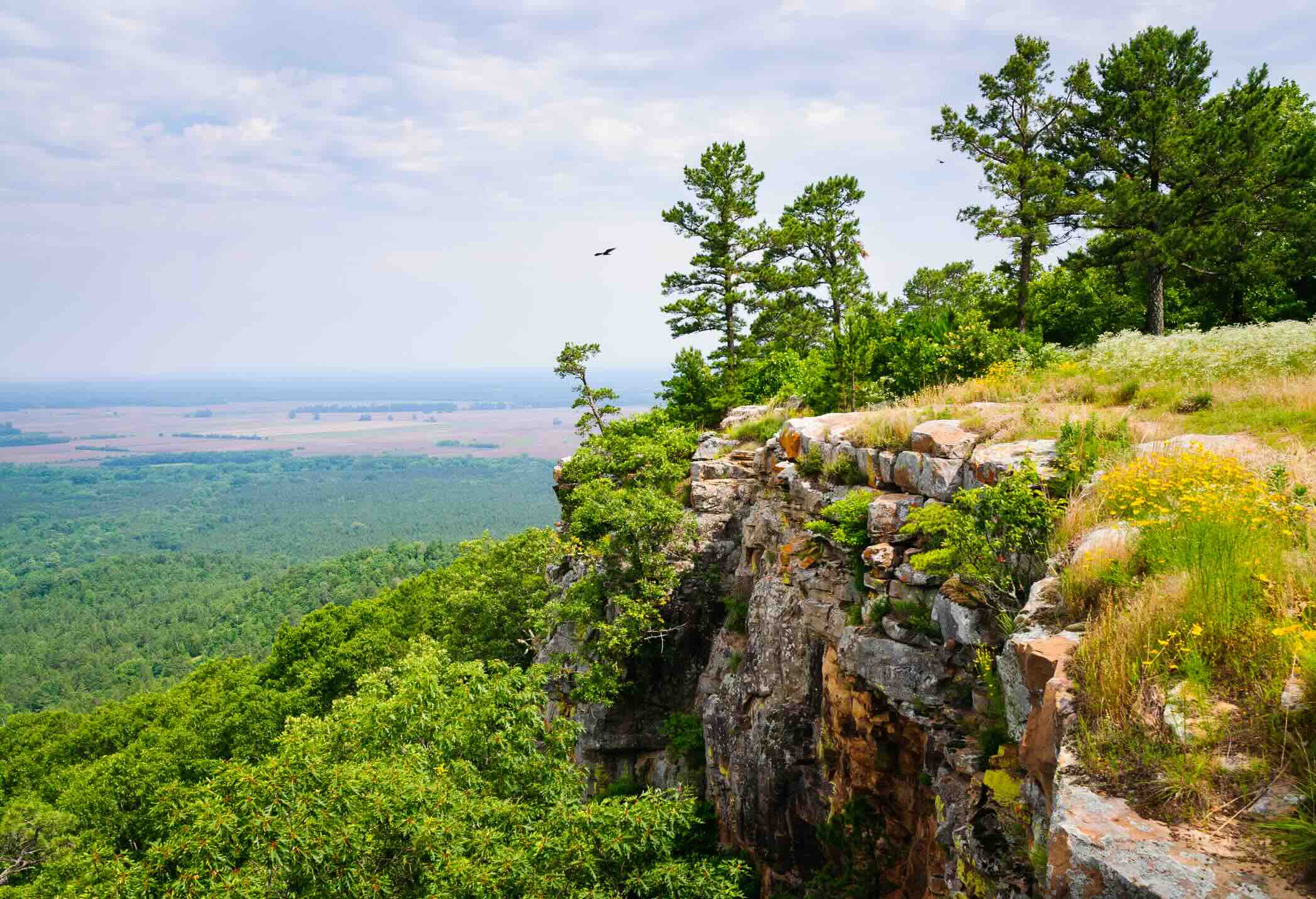


Writing in the Arkansas Democrat-Gazette, ACR executive director Mary Grady argues that carbon markets give Arkansas forest owners a practical reason to keep their land intact.
Arkansas lost more than 80,000 acres of forestland last year, partly because owning it is expensive. Carbon markets work on a simple principle: landowners are paid for emissions reduced or removed through activities that would not have happened otherwise. Lengthening the interval between timber harvests, for instance, stores more carbon in a forest and creates a new source of income.
Mary traces the market’s origins to Arkansas. In 1953 Winthrop Rockefeller, grandson of John D. Rockefeller and later governor of the state, founded Winrock Farms on Petit Jean Mountain to demonstrate modern agricultural methods. That work led to the nonprofit Winrock International and then to ACR, which in 1996 launched the world’s first private greenhouse gas crediting program. It issued the first serialized carbon credits in 2002, while governments were still debating climate policy and most of the private sector stayed on the sidelines. Since then the program has issued 375 million credits across 875 projects worldwide, more than 60 of them in Arkansas, and lists projects covering 13.5 million acres of forestland across the US and Canada.
The case for Arkansas rests on who owns the trees. Families hold 55 percent of the state’s forests, and more than 200,000 of them own forestland. Most manage it for hunting, wildlife and recreation, harvesting timber when money is needed. When the older generation dies, heirs often face inheritance taxes and the choice of subdividing or selling. Many forests are lost at exactly that point. Carbon revenue offers a way to meet those costs and keep the land in the family.
Whatever a landowner thinks about climate change, Mary writes, the income is tied to improving forest health. She calls it a legacy of Rockefeller’s pragmatic idealism, and a global market whose opportunity in Arkansas remains local: earning income from leaving trees standing.
You can read the full op ed in the Arkansas Democrat-Gazette here.