

This website uses cookies so that we can provide you with the best user experience possible. Cookie information is stored in your browser and performs functions such as recognising you when you return to our website and helping our team to understand which sections of the website you find most interesting and useful.
News Category: General
ACR Presents 2025 Carbon Market Awards at Annual Gala
Share


Climate Scientist Carlos Nobre, Arbor Day Foundation, Duke University, and Grupo Perú and the Ministry of Environment of Perú recognized for enduring and innovative commitment to climate action.
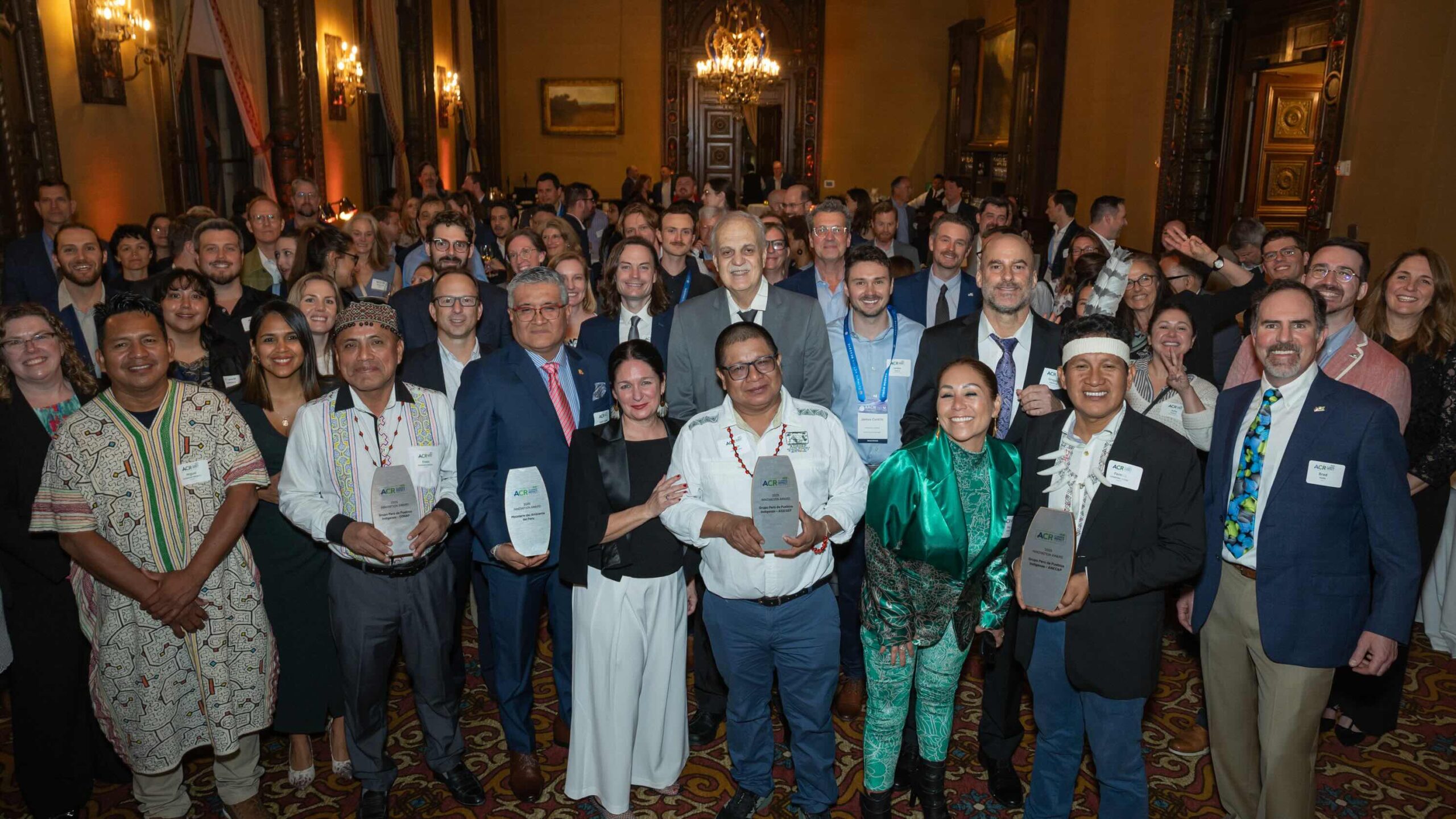
LOS ANGELES – March 26, 2025 – ACR recognized trailblazing individuals and organizations for their commitments to climate action at its 2025 ACR Climate Impact Awards, which has been held annually for more than 15 years. The 2025 ACR Climate Leadership Award was presented to Carlos Nobre, a world-renowned Brazilian scientist whose pioneering research on the Amazon has shaped global climate policy and created practical solutions to harness economic opportunities for forest conservation. ACR also recognized the Arbor Day Foundation, Duke University, and Peruvian Indigenous organizations and the Ministry of Environment with awards.
“From the conservation of the Amazon rainforest to reforestation in the Mississippi Delta and the destruction of potent greenhouse gases, the carbon market is incentivizing impactful climate action during this critical decade,” said Mary Grady, Executive Director of ACR. “The 2025 ACR Climate Impact Award winners show that we all have important roles to play – scientists, governments, nonprofits, Indigenous Peoples, academia and companies – to advance climate solutions. We thank each of the award winners for their tireless dedication.”
Earth System scientist Dr. Carlos Nobre received the 2025 Climate Leadership Award for his lifetime of pioneering scientific research on the critical role of preserving the Amazon rainforest to combat climate change and avoid the tipping point of ecological collapse. As a Nobel Laureate for his contribution to the Intergovernmental Panel on Climate Change (IPCC) fourth Assessment Report, and a member of the US National Academy of Sciences, the Brazilian Academy of Sciences, the Royal Society and the World Academy of Sciences, Dr. Nobre has effectively translated his groundbreaking science into climate policy. Nobre has provided data-driven evidence to the global scientific community, as well as national and international policymakers and citizens, of the inextricable links among forests, biodiversity and climate change. As the founder of Amazônia 4.0, he has highlighted practical solutions to bring wealth and development to the Amazon and its peoples while protecting and restoring forests, and he has inspired collective, global action towards this goal.
Nobre thanked ACR for the recognition of his work and stated “If we exceed the tipping point, we will lose 50 to 70 percent of the Amazon rainforest, and we may reach the tipping point by 2050 if we continue current rates of deforestation and global warming. My research on the savannization of the Amazon showed the risks to the global ecosystems from exceeding planetary boundaries. I have worked to mentor a new generation of leaders, scientists and ecopreneurs to help us create a sustainable planet based on the socio-bioeconomy. Now that we have proven the vast worth of the Amazon rainforest, we must preserve indigenous knowledge and increase the value of the Amazon’s resources and its main ecosystem services, and that includes using innovative financing such as high integrity carbon markets to help save the Amazon.”
The Arbor Day Foundation received the 2025 Commitment to Quality Award for using carbon markets to help accelerate climate goals by financing reforestation projects. The Arbor Day Foundation has planted more than half a billion trees in more than 60 countries since 1972. The nonprofit’s wholly owned subsidiary, Arbor Day Carbon, collaborates with landowners, project developers, and credit buyers to access carbon credits to plant and grow new trees, including in the Mississippi River Alluvial Valley with the GreenTrees project. To date, the organization has retired more than 1.6 million credits issued by ACR, planting millions of trees as a result.
“A thriving voluntary carbon market can have a planet-shaping impact,” said Chris Tointon, President of Arbor Day Carbon. “Every carbon credit we retire is a win for the present and future of our planet and a record of real, measurable impact.”
Duke University received the 2025 Organizational Excellence Award for achieving its pledge to become carbon neutral by 2024, including a 31% reduction in greenhouse gas emissions since 2007 despite a 24% growth in campus population and the addition of 3 million square feet of new building space. In addition to investing hundreds of millions of dollars in infrastructure improvements and efficiencies, Duke also took responsibility for its remaining emissions by using 232,000 carbon credits in 2024 to achieve its goal, over 75% of which were ACR-issued credits sourced from high-quality projects to collect and destroy potent ozone-depleting refrigerant gases.
“Achieving carbon neutrality on campus is a triple winner – we reduce our carbon footprint, we save money in the long term, and we demonstrate how universities can be part of the climate solution,” said Toddi Steelman, Vice President and Vice Provost for Climate and Sustainability at Duke University. “Our Duke Climate Commitment extends to every facet of our university, including operations, research, education, community partnerships and external engagement. We are now setting even more ambitious goals at Duke, not only to reduce carbon emissions but also to develop sustainable operation goals and strategies.”
The Ministry of Environment of Perú (MINAM) and Indigenous organizations of Grupo Perú received the 2025 Innovation Award for partnering to develop the world’s first Indigenous Jurisdictional REDD+ Program under the Architecture for REDD+ Transactions (ART). The collaboration between MINAM and the Indigenous organizations known as Grupo Perú – ANECAP, AIDESEP, and CONAP – not only recognizes Indigenous rights and the crucial role that Indigenous knowledge and governance play in forest conservation but also sets a global example of what can be achieved when governments work hand in hand with communities to address climate change. By uniting the strengths of national governments and Indigenous Peoples, the partnership is demonstrating that it is possible to protect the forests, honor Indigenous rights, and create lasting, sustainable benefits for all involved.
“The Government of Peru is proud to be partnering with Indigenous organizations to create a new model for the world,” said Minister of Environment of Peru Juan Carlos Castro Vargas. “Built on a foundation of mutual respect, this collaboration highlights the essential connection between forest conservation, Indigenous rights, and climate action.”
“Indigenous jurisdictional REDD+ is an opportunity to recognize Indigenous Peoples as partners and not only as beneficiaries in nature-based solutions to climate change,” said Fermín Chimatani of ANECAP. “As guardians of some of the world’s most biodiverse and carbon-rich forests, this partnership is a step forward for the recognition of Indigenous Peoples’ rights and for rewarding our efforts in the fight against deforestation” said Jorge Pérez of AIDESEP. “This initiative shows how jurisdictional REDD+ can be developed in partnership with Indigenous Peoples, recognizing our leadership in preserving highly valuable ecosystems and delivering climate action at scale” said Oseas Barbarán of CONAP.
Issued annually, previous winners of the ACR Climate Leadership Award include John Kerry (Special Presidential Envoy for Climate at the time), Christiana Figueres (Executive Secretary of the U.N. Framework Convention on Climate Change at the time); Mary Nichols (Chair of the California Air Resources Board at the time); Tom Vilsack (former U.S. Secretary of Agriculture); Todd Stern (U.S. Special Envoy for Climate Change at the time); Paul Hawken (author and founder of Project Drawdown); Jonathan Pershing (Environment Program Director at the William and Flora Hewlett Foundation) and Frances Seymour (then Senior Scientist at the World Resources Institute and one of the world’s foremost authorities on the relationships between tropical forests and climate change).
ACR is an internationally recognized carbon crediting program that operates in global compliance and voluntary carbon markets. A nonprofit enterprise of Winrock International, ACR was founded in 1996 as the first private greenhouse gas (GHG) registry in the world with the mission of harnessing the power of markets to improve the environment.
ACR and ART Announce Transition to New Next-Generation Registry Platform

Share
ICE Plans Mid-2026 Launch of Environmental Registry Services to Bring State-of-the-Art Infrastructure to Carbon Markets
ATLANTA — Intercontinental Exchange, Inc. (NYSE:ICE), a leading global provider of technology and data, and the world’s largest operator of environmental derivatives markets, today announced plans to launch an environmental registry technology service to bring best in class infrastructure to registries and registry users and support the adoption of carbon credits as an asset class. ICE’s service, called ICE GreenTrace™, is expected to launch in the late spring of 2026 and is designed to support registries and registry users across the life cycle of a carbon credit.
Launch partner, Winrock International’s Environmental Resources Trust (ERT), will use ICE’s registry technology service for its world-leading crediting programs: ACR, the Architecture for REDD+ Transactions (ART) and the new sectoral crediting standard in development for the Energy Transition Accelerator (ETA).
ERT launched ACR, formerly the American Carbon Registry, in 1996 as the world’s first private greenhouse gas registry. ART was established in 2018 as the first market-based initiative to incentivize the protection and restoration of tropical forests at scale, also known as jurisdictional REDD+. ERT was selected in 2023 by the ETA Founding Partners to develop and pilot the carbon crediting standard for the ETA to accelerate a clean power transition in emerging and developing economies.
“The ICE registry platform is a leap forward for the technology infrastructure underpinning global carbon markets, providing powerful next-generation digital functionality to all registry users to enhance efficiency and market integration,” said Mary Grady, CEO of Environmental Resources Trust. “Bringing nearly 30 years of carbon market experience to our role as ICE’s launch partner, we are excited to join forces with an industry leader to deliver a transformational platform that supports the market growth required to achieve global climate goals.”
“Building on more than two decades of expertise in analogue to digital transformations across multiple asset classes, ICE now plans to deliver mission-critical infrastructure to the carbon credit market. We selected ERT as our launch partner based on their reputation for excellence, longstanding support of carbon markets, and commitment to a market infrastructure transformation,” said Gordon Bennett, Global Head of Environmental Markets at ICE. “ICE’s technology will bring unparalleled financial market infrastructure to allow customers to more confidently invest in and manage carbon assets at a time when transparency and trust are vital for scaling carbon credit markets.”
Since its inception, ICE has built a global digital network connecting energy and environmental market participants to the tools needed to mitigate risk, achieve compliance, and invest, all within a secure, highly regulated, and transparent operational framework. Today, ICE is home to the most liquid venues in the world to trade energy and environmental derivatives. In 2024, a record 20.4 million environmental contracts traded on ICE, equivalent to over $1 trillion in notional value for the fourth consecutive year with more than $50 billion physically delivered to multiple registries.
To find out more information about ICE’s environmental registry services or to be kept updated on progress, please contact GreenTrace@ICE.com.
About Intercontinental Exchange
Intercontinental Exchange, Inc. (NYSE: ICE) is a Fortune 500 company that designs, builds and operates digital networks that connect people to opportunity. We provide financial technology and data services across major asset classes helping our customers access mission-critical workflow tools that increase transparency and efficiency. ICE’s futures, equity, and options exchanges – including the New York Stock Exchange – and clearing houses help people invest, raise capital and manage risk. We offer some of the world’s largest markets to trade and clear energy and environmental products. Our fixed income, data services and execution capabilities provide information, analytics and platforms that help our customers streamline processes and capitalize on opportunities. At ICE Mortgage Technology, we are transforming U.S. housing finance, from initial consumer engagement through loan production, closing, registration and the long-term servicing relationship. Together, ICE transforms, streamlines and automates industries to connect our customers to opportunity.
Trademarks of ICE and/or its affiliates include Intercontinental Exchange, ICE, ICE block design, NYSE and New York Stock Exchange. Information regarding additional trademarks and intellectual property rights of Intercontinental Exchange, Inc. and/or its affiliates is located here. Key Information Documents for certain products covered by the EU Packaged Retail and Insurance-based Investment Products Regulation can be accessed on the relevant exchange website under the heading “Key Information Documents (KIDS).”
Safe Harbor Statement under the Private Securities Litigation Reform Act of 1995 – Statements in this press release regarding ICE’s business that are not historical facts are “forward-looking statements” that involve risks and uncertainties. For a discussion of additional risks and uncertainties, which could cause actual results to differ from those contained in the forward-looking statements, see ICE’s Securities and Exchange Commission (SEC) filings, including, but not limited to, the risk factors in ICE’s Annual Report on Form 10-K for the year ended December 31, 2023, as filed with the SEC on February 8, 2024.
About Environmental Resources Trust
Environmental Resources Trust (ERT), a nonprofit enterprise of Winrock International, offers trusted solutions to environmental markets to catalyze transformational climate impacts. With the mission of harnessing the power of markets to improve the environment, ERT operates internationally recognized carbon crediting programs, ACR and the Architecture for REDD+ Transactions (ART). Founded in 1996 as the world’s first private carbon registry, ACR has extensive operational experience in global compliance and voluntary carbon markets, having issued over 300 million high-quality, verified CO2 emission reduction and removals credits. ART is the leading global carbon market initiative for jurisdictional REDD+, ensuring the social and environmental integrity of climate results from protecting and restoring forests at scale. ART’s growing pipeline of participating jurisdictions currently includes over two dozen governments on five continents covering 400 million hectares of tropical forests. ERT is also developing the sectoral carbon crediting standard for the Energy Transition Accelerator (ETA), with the goal of incentivizing steeper and more rapid decarbonization of the electric power sector in emerging and developing economies. The ETA is an innovative carbon finance platform launched in 2023 by the U.S. Department of State, Bezos Earth Fund and the Rockefeller Foundation.
ACR in the Field
Share
In 2024, ACR team members visited fourteen projects, including the following:
- Affinity Mine Methane Incineration Project (ACR674)
- Beckley Pocahontas Mine Methane Incineration Project (ACR746)
- Bonny Abandoned Mine Methane Recovery Project (ACR806)
- Buchanan VAM VS-16 (ACR908)
- Carlisle Abandoned Mine Methane Recovery Project (ACR930)
- Cumberland Forest – Lonesome Pine Improved Forest Management Project (ACR279)
- Greenwood Dairy Anaerobic Digester (ACR355)
- Lower Green Swamp Preserve (ACR483)
- Navajo Nation Forestry Project (ACR555)
- New Future Abandoned Mine Methane Recovery Project (ACR669)
- Perennial CMM Emerald Mine AMM Flare Project (ACR811)
- Rudio Mountain Forest Carbon Project (ACR1053)
- Shoal Creek Mine Methane Incineration Project (ACR807)
- Winston Creek Forest Carbon Project (ACR 389)
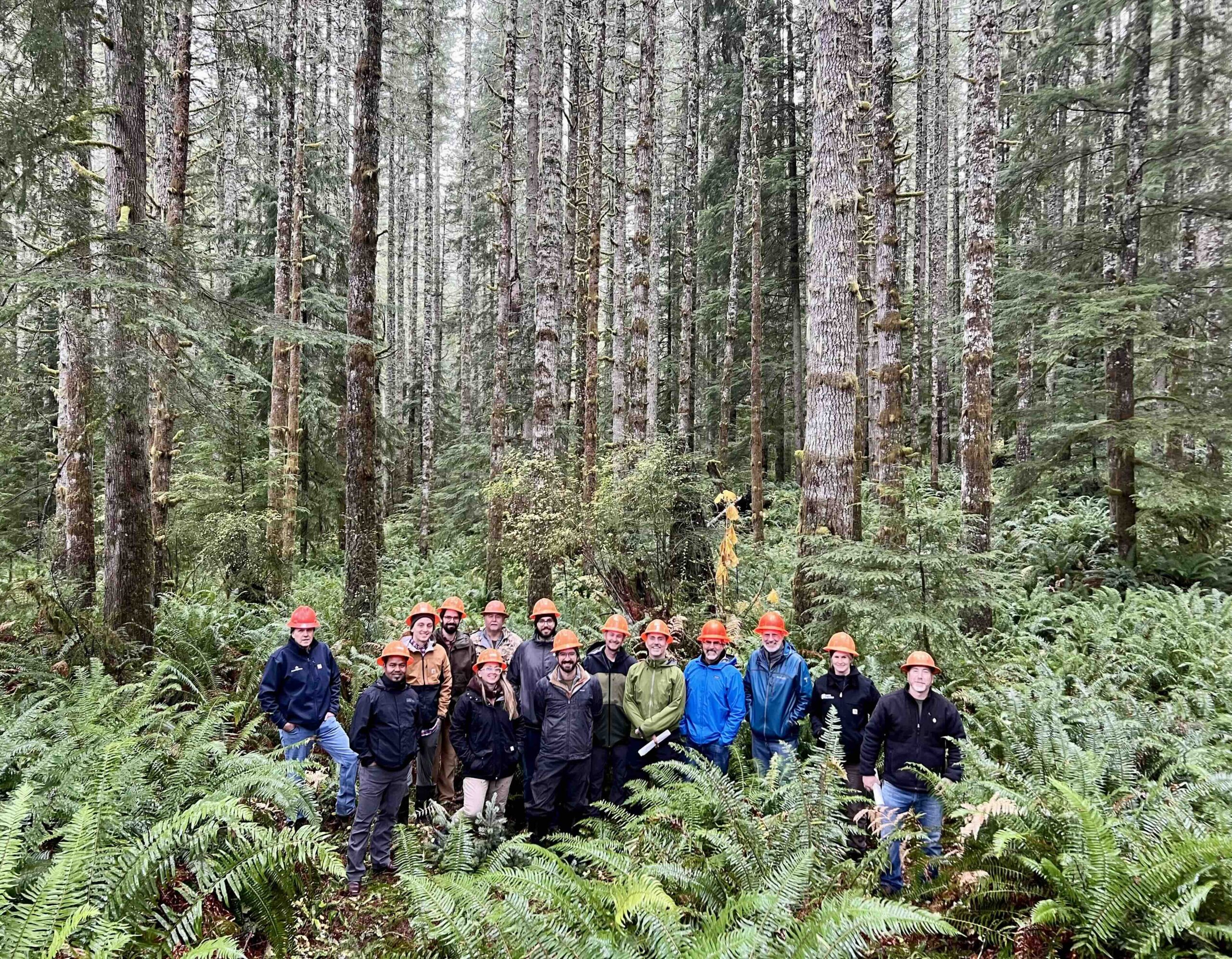
SPOTLIGHT: Forestry Team Visits Winston Creek Late last year, members of the ACR Forestry Team had a chance to visit the Winston Creek Forest Carbon Project near Morton, WA. Developed by Port Blakely, the project is set in western Washington amongst some of the most productive forests in North America. The Winston Creek project offered an excellent opportunity for the ACR team to engage directly with managers in a working forest and to get boots-on-the-ground time at one of our forest carbon projects. ACR offers our sincere thanks to Port Blakely for hosting us and for generously sharing their time and expertise.
ACR Statement in Response to Bloomberg Article on Buffer Pools

Share
When it comes to climate action, sooner is better than later. The world needs to act with urgency and to encourage early and decisive action, even as science, technologies and best practices continue to evolve.
We applaud first movers, like Nike, who take ambitious, voluntary actions to reduce their own operational and supply chain emissions. If more companies had acted like Nike did nearly 20 years ago, the world would be in a better place. Instead, many companies eschewed climate leadership, which, in addition to the lack of national climate regulation in the U.S. and other major emitting countries, explains the current climate crisis.
To meet the Paris Agreement climate targets – the world’s best hope to avoid catastrophe – protection, conservation and restoration of forests are critical. These actions are also among the most readily deployable, affordable and scalable available today. When it comes to mitigating reversal risks associated with these projects, ACR has robust, legally binding and enforceable systems in place to ensure the integrity of the carbon credits we issue.
ACR has separate mechanisms to address unintentional (e.g., wildfire) and intentional (e.g., over-harvesting) reversals from forest and land use projects. Project Proponents are legally bound to fully compensate for intentional reversals. For unintentional reversals, ACR manages a diverse, well-capitalized Buffer Pool. Currently the ACR Buffer Pool represents approximately 20% of credits issued from projects that require a Buffer Pool contribution. ACR has yet to experience an unintentional reversal from its Forestry and Land Use portfolio of nearly 80 projects.
ACR’s Buffer Pool contains a diverse mix of credits, which adds integrity to the pool overall. Many of the credits in the ACR Buffer Pool are from project activities that are not reversable, such as landfill gas and switch to low Global Warming Potential refrigerants. In addition to the diversity of types of credits in the Buffer Pool, the number of projects being backed by the pool and their geographic diversity makes it very unlikely that a single catastrophic event could cause a reversal that would threaten to deplete the pool.
And because ACR does not refund credits deposited to the Buffer Pool, the overall pool continues to grow. In addition, in the case of an unintentional reversal, ACR follows its protocol as detailed in the Buffer Pool Terms and Conditions for cancellation of credits, including project type and vintage. As a result, it is uncertain whether older vintage non-forestry credits will ever be canceled to compensate for unintentional reversals.
In summary, ACR is confident in the rigor of our approach to mitigate the risk of reversals for forestry and land use projects, and we will continue to evaluate other options that become available in the market.
ACR RESPONSES TO INQUIRIES FROM BLOOMBERG
Below are ACR’s responses to email inquiries from Ben Elgin of Bloomberg.
JUNE 2024
1) Critics of rules that allow buffer-credit substitution fear that this will allow in lower-quality credits, and thus undermine the effectiveness of this as an insurance mechanism. I realize ACR tightened the rules a bit (around vintage, if I recall correctly) a couple of years back. It would be great to discuss this and hear ACR’s thoughts on this criticism.
First it is important to note that the ACR Buffer Pool is only used to compensate for unintentional reversals. Intentional reversals must be compensated directly by the Project Proponent based on a legally binding agreement with ACR.
ACR allows Buffer Pool contributions from any ACR project type, with the vintage of credits used for Buffer Pool Contributions limited to no more than five (5) years prior to the vintage of the carbon credits being verified and issued. ACR allows for non-reversible tons to be contributed to the Buffer Pool to ensure the pool is robust and can mitigate large or widespread natural disturbances. Similar to any risk mitigation mechanism, diversity in the makeup of this pool adds resilience. A larger and more-diverse credit pool, in terms of geography, project type, and reversal risk, is better.
ACR has a large and growing volume of credits issued to aggregated or programmatic projects, which by definition have a wide geographic spread and inherent diversity, decreasing the likelihood of a single catastrophic event causing a reversal. In the event of an unintentional reversal from a project, ACR cancels credits in the Buffer Pool as detailed in the ACR Buffer Pool Terms and Conditions Section VIII. ACR has yet to experience an unintentional reversal from its AFOLU portfolio (nearly 80 projects) that requires compensation from the Buffer Pool.
2) The Nike gas-substitution project is the biggest in the pool, making up more than 18% of the total. I’d like to discuss this project…I thought it was mostly dormant. But many who worked on this two decades ago say that carbon credits didn’t spur the gas-substitution work. I’d be curious to hear ACR’s thoughts on this. And I’d like to know who supplied these credits to the buffer pool?
The Nike project was one of the world’s first voluntary corporate GHG emission reduction projects and earned credits by replacing SF6 – a highly potent GHG with a GWP of over 22,000 – in its most popular shoes, retooling its manufacturing and making changes to its supply chain accordingly. The project is dormant in that no credits have been issued to it since 2005.
3) There are three renewable-energy projects in here, which combine to make up around 15% of the pool. These types of credits have long been criticized for lack of additionality. People involved with two of these projects have told me they would have been built without carbon credits. I’d be curious to hear ACR’s thoughts on this.
The renewable energy credits were verified to meet additionality and other requirements of the methodology.
AUGUST 2024
1) You mentioned in the June email that the vintage of credits used for buffer-pool contributions can be no more than five years prior to the vintage of the carbon credits being verified/issued. I just want to clarify: This is a fairly new requirement that doesn’t apply retroactively to previous buffer contributions, is that accurate?
The ACR Buffer Pool Terms and Conditions requirement regarding the vintage of credits contributed to the Buffer Pool has been in place since the beginning of 2021 and is not retroactive.
2) In the ACR blog post, it says that reversals for projects that contributed AFOLU credits to the buffer pool would be compensated with AFOLU credits from the buffer pool. Is there a way for buyers – or the general public – to see what credits, or types of credits, were contributed to the buffer pool by each project?
All credits that have been contributed to the ACR Buffer Pool are published on the ACR registry. Contributions are not linked to specific projects because the mechanism is a pool. Protocol for use of credits from the pool to compensate for unintentional reversals is detailed in the ACR Buffer Pool Terms and Conditions.
3) The Nike project looks to be non-additional. The company’s ESG report at the time counted the emission reductions that were then sold as carbon credits. People who worked on this project for Nike tell me that the sale of carbon credits didn’t factor into its decisions/efforts to switch out heat-trapping gases from its shoes. Some of this might be understandable as the carbon market was in its infancy at the time. But what does ACR say to people who are concerned that close to 20% of the buffer pool is from this non-additional project?
ACR refutes your unsupported allegation that the Nike project is non-additional. According to the project documents published on the ACR Registry, the project’s additionality was both regulatory and financial: There were no existing federal, state or local regulatory requirements for the phase-out the use of, capture, and/or destruction of SF6 or C3F8. And at the time of the switch, the price of SF6 was ~$5.25/lb and the replacement gas, C3F8 cost ~$9.25/lb. Neither the performance nor the cost of C3F8 relative to that of SF6 justified Nike’s switch to the use of C3F8. The primary stated reason for Nike to switch gases was to produce a net environmental benefit.
4) Lastly: Several fires have hit carbon projects in the western US this summer. It looks like the Shelly Fire hit ACR733 (Scott River Whiskey) pretty hard; and it may have also impacted ACR732 (Scott River Shackleford). I realize this only recently happened; but do you have any preliminary updates on the fire impacts for ACR carbon projects (such as number of acres impacted or the amount of carbon lost) from this summer?
ACR is aware of the fire burning in or near carbon project areas. However, until the fire is extinguished, the full extent of its impact cannot be safely or accurately assessed. The ACR Buffer Pool Terms & Conditions details how reversals are reported and the volume assessed, and how reversals are verified and ultimately compensated.
If the fire causes a reversal, it would represent the first use of the ACR Buffer Pool to compensate for an unintentional reversal.
The ACR Buffer Pool is used to compensate for unintentional reversals for ACR projects only. Intentional reversals of ACR projects must be compensated directly by the Project Proponent based on a legally binding agreement with ACR. California ARB manages a separate buffer pool to address risk to projects operating in its compliance market.
ACR at New York Climate Week

Share
ACR is headed to New York Climate Week to participate in a range of events, including:
- Xpansiv Climate Week Summit
- Accelerating Climate Action: Delivering High Integrity Carbon Markets
- The Nature Hub at Climate Week New York City 2024
- IETA North America Climate Summit
If you’d like to try to connect in New York, send a note to Brad Kahn, communications director (brad.kahn@winrock.org).
We hope to see you there!
Case Studies: ACR Launches New Case Studies

Share
To highlight the positive impacts of carbon projects using ACR methodologies, we recently launched a new series of case studies. The first two case studies include the following:
- Anew-Tomah Highlands Forestry Project: Set on more than 36,000 acres of Acadian Forest in Maine, the project shows how the sale of carbon credits supports conservation and climate goals, while also promoting regional economic development to build the bioeconomy from responsible forestry.
- Tradewater-Thailand Carbon Project: With no law, rule or regulation requiring the destruction of ozone-depleting substances – which are also potent climate-changing gases – and without financial resources to pay for destruction, the Thai government worked with Tradewater to safely and responsibly destroy gas from more than 1,400 cylinders.
In the months ahead, ACR will be developing other case studies to dig into the stories of the people and organizations using carbon markets to drive climate solutions forward.
Two ACR Methodologies Earn Core Carbon Principle (CCP) Approval from the Integrity Council for the Voluntary Carbon Market (ICVCM)

Share
Destruction of Ozone Depleting Substances from International Sources and Landfill Gas Destruction and Beneficial Use Projects earn CCP Labels
Two ACR methodologies have earned Core Carbon Principle (CCP) approval from the Integrity Council for the Voluntary Carbon Market (ICVCM) in their first round of methodology assessments. Carbon credits issued to projects under the methodologies, Destruction of Ozone Depleting Substances (ODS) from International Sources (version 1.0) and Landfill Gas Destruction and Beneficial Use Projects (versions 1.0 and 2.0), are eligible for CCP-Approved status.
The CCP label, now active in the ACR Registry, is applied to credits issued to projects verified for conformance with the methodologies above. Close to two million ACR-issued carbon credits now bear the CCP label.
While ACR views this as an important step forward, we will continue to engage with ICVCM throughout their assessment process with the intent of securing CCP-Approved labels for all credits issued to our portfolio of active methodologies, which includes emission reductions and removals from industrial and nature-based solutions.
ICVCM approved ACR at the program level as “Core Carbon Principles (CCP) Eligible” in April 2024. To become approved, ACR submitted an extensive application to ICVCM for assessment. We provided evidence of being a CORSIA Eligible Emissions Unit Program, in addition to meeting the CCP’s criteria around effective governance, credit tracking, transparency, and robust, independent third-party validation and verification.
Since its founding in 1996 as the world’s first private greenhouse gas registry, ACR has innovated and operationalized key elements of carbon credit quality assurance, including scientific peer-reviewed accounting methodologies and well-accepted approaches to address additionality, leakage, and reversal risk mitigation; oversight of independent third-party verification; and operation of a transparent registry for the issuance and tracking of serialized credits.
ACR’s approach to program quality has earned approval to issue credits for use in regulated carbon markets, including the State of California’s Cap-and-Trade Program, the International Civil Aviation Organization’s (ICAO) Carbon Offsetting and Reduction Scheme for International Aviation (CORSIA), the State of Washington’s Cap-and-Invest Program, and towards compliance with Singapore’s Carbon Pricing Act.
ACR expects additional methodologies to earn ICVCM approval, which will provide confidence to buyers in credit quality and allow finance to flow to impactful climate solutions to support the goals of the Paris Agreement. The urgency of climate change demands nothing less.
About ACR
ACR is an internationally recognized carbon crediting program that operates in global compliance and voluntary carbon markets. A nonprofit enterprise of Winrock International, ACR was founded in 1996 as the first private greenhouse gas (GHG) registry in the world with the mission of harnessing the power of markets to improve the environment. ACR has long pioneered science-based methodologies for activities that reduce and remove GHG emissions in the forestry and land use, energy, and industrial sectors. ACR methodologies are built on the ACR Standard, which is rooted in sound science to ensure the emission reduction and removal credits we issue are real, additional, permanent, and independently verified.
ACR Welcomes U.S. Government’s Approach to Advancing High-Integrity Voluntary Carbon Market

Share
Today, as the Biden-Harris Administration issued its “Voluntary Carbon Markets Joint Policy Statement and Principles,” ACR Executive Director, Mary Grady, offered the following statement:
“ACR welcomes the U.S. Government’s endorsement of the Voluntary Carbon Market as a critical tool in the fight against climate change. The world is facing an urgent, existential challenge. Nothing can move much-needed climate investments as fast as markets. We applaud the United States for recognizing the fundamental role markets play to promote beneficial climate action.”
“ACR’s mission is to create confidence in the integrity of carbon markets because we have long recognized the importance of integrity to unlock the power of markets to finance ambitious climate results. The United States has now put its full weight behind this approach, which aligns well with important global initiatives, including the International Civil Aviation Organization’s (ICAO) CORSIA and the Integrity Council for the Voluntary Carbon Markets Core Carbon Principles, alongside the Paris Agreement’s Article 6. This welcome convergence of credit supply criteria for compliance and voluntary uses will help reduce confusion and provide confidence in carbon markets overall, which we welcome.”
“The work being invested in the Voluntary Carbon Market is a sign of its importance as a climate solution. ACR is heartened to see integrity initiatives settle on a core set of principles to unlock additional private sector action on the carbon credit supply side and climate finance on the demand side. We are actively engaging in and supporting the work underway to shape the market going forward, bringing our decades of expertise to bear and helping our partners navigate the playing field.”
“We urge all companies to engage in high integrity carbon markets. No matter how much work an organization has done to decarbonize, the simple fact is that residual emissions remain. The U.S. Government principles offer additional clarity on acceptable pathways forward to develop and implement plans to abate any emissions that cannot be avoided, including through the use of high-quality carbon credits. ACR stands ready to continue supporting and developing global carbon markets as a tool for urgent, impactful action. The climate, and life on Earth, demands nothing less.”
###
About ACR
ACR is an internationally recognized carbon crediting program that operates in global compliance and voluntary carbon markets. A nonprofit enterprise of Winrock International, ACR was founded in 1996 as the first private greenhouse gas (GHG) registry in the world with the mission of harnessing the power of markets to improve the environment. ACR has long pioneered science-based methodologies for activities that reduce and remove GHG emissions in the forestry and land use, energy, and industrial sectors. ACR methodologies are built on the ACR Standard, which is rooted in sound science to ensure the emission reduction and removal credits we issue are real, additional, permanent, and independently verified. Learn more at https://acrcarbon.org/.