


This website uses cookies so that we can provide you with the best user experience possible. Cookie information is stored in your browser and performs functions such as recognising you when you return to our website and helping our team to understand which sections of the website you find most interesting and useful.
Archives: Methodology
Methodology
INACTIVE: N2O Abatement from Nitric Acid Production

Share


Previously, methodologies approved by the CDM Executive Board were approved for use on ACR for the registration of projects in non-Annex 1 countries or for registration of projects in the U.S. after ACR review and approval of special applicability conditions. Under ACR Standard v7.0, CDM methodologies are no longer accepted for crediting new projects on ACR. Therefore, ACR’s approval of the Clean Development Mechanism’s Methodology ACM0019 version 4, N2O Abatement from Nitric Acid Production, is withdrawn and the methodology is ineligible for crediting projects on ACR.
Read more
Methodology History
The methodology is applicable to project activities that introduce N2O abatement measures in nitric acid plants. Nitric Acid is used to produce products such as fertilizer and various plastics and is produced from the oxidation of ammonia via catalysis. The methodology applies to those projects using either Secondary N2O abatement or Tertiary N2O abatement. Secondary N2O abatement refers to the catalytic removal of N2O from the intermediate gas stream between the ammonia reactor and the absorption tower. Tertiary N2O abatement refers to the destruction of N2O in the tail gas from the absorption tower.
INACTIVE: Conversion of High-Bleed Pneumatic Controllers in Oil & Natural Gas Systems
Share
The ACR methodology for Conversion of High-Bleed Pneumatic Controllers in Oil & Natural Gas Systems is inactive and ineligible for crediting projects on ACR. The methodology relies on a performance standard additionality test that, per requirements in the ACR Standard, must be re-assessed at minimum every 5 years. The methodology may become active again based on the results of the performance standard review.
Read more
Methodology History
The methodology details requirements for oil & gas companies to reduce fugitive emissions of methane, a potent greenhouse gas, by retrofitting existing high-bleed pneumatic controllers in the U.S. with low-bleed options. According to the U.S. Environmental Protection Agency, high-bleed pneumatic controllers are among the largest sources of vented methane by equipment type in the domestic oil & natural gas industry.
INACTIVE: Switch from non-renewable biomass for thermal applications
Share
Previously, methodologies approved by the CDM Executive Board were approved for use on ACR for the registration of projects in non-Annex 1 countries or for registration of projects in the U.S. after ACR review and approval of special applicability conditions. Under ACR Standard v7.0, CDM methodologies are no longer accepted for crediting new projects on ACR. Therefore, ACR’s approval of the methodology Switch from non-renewable biomass for thermal applications by the user, which is based on the Clean Development Mechanism’s Small Scale Methodology: AMS I.E, Version 05, is withdrawn and the methodology is ineligible for crediting projects on ACR.
Read more
Methodology History
When project proponents wish to propose modifications to an existing methodology, ACR requires an approval process either via ACR’s regular public consultation and scientific peer review process in the case of significant modifications, or by an independent ACR AFOLU Technical Committee in cases where the proposed modifications are minor.
First methodology modification, approved April 2011:
- Adds to the list of eligible technologies/measures a switch from conventional fuels (e.g. fuelwood and charcoal) to renewable fuels. As in AMS I.E Version 03 with “renewable energy technologies,” renewable fuels reduce the use of conventional fuels and the project proponent must demonstrate what portion of those fuels are non-renewable woody biomass.
- Provides a new equation to derive By, the quantity of woody biomass substituted or displaced. This is based on the quantity of renewable fuels sold, with terms to account for the fact that less than 100% of renewable fuel sold may displace traditional biomass, and for the difference in net calorific value (NCV) between the new and old fuels.
- Requires monitoring of fuel use by households, in a similar annual sampling approach as is required in AMS I.E Version 03 for monitoring the use of renewable energy technologies.
Second methodology modification, approved July 2013:
The second modification results from an analogous modification to CDM methodology AMS II.G, Energy Efficiency Measures in Thermal Applications of Non-Renewable Biomass, approved by the ACR AFOLU Technical Committee and published in July 2013. In that modification, the fossil fuel emission factors used in AMS II.G to calculate baseline emissions are based on an assumed shift from non-renewable biomass to fossil fuels. These were replaced by biomass emission factors for fuelwood and charcoal.
The rationale was that households in many developing countries where this methodology may be applied are using fuelwood/charcoal in the baseline, and when they install an efficient cookstove they still use fuelwood/charcoal but less of it, rather than switching to fossil fuels. This leads to a reduction in use of and emissions from non-renewable biomass. To recognize this, ACR replaced the fossil fuel emission factors in Equation (1) of AMS II.G with appropriate and conservative biomass emission factors for fuelwood and charcoal, derived from the 2006 IPCC Guidelines for National Greenhouse Gas Inventories.
AMS I.E uses the same fossil fuel emission factors. With the same rationale, ACR in this modification to AMS I.E replaces those with biomass emission factors.
INACTIVE: Improved Efficiency of Vehicle Fleets
Share
Previously, methodologies approved by the CDM Executive Board were approved for use on ACR for the registration of projects in non-Annex 1 countries or for registration of projects in the U.S. after ACR review and approval of special applicability conditions. Under ACR Standard v7.0, CDM methodologies are no longer accepted for crediting new projects on ACR. Therefore, ACR’s approval of the CDM methodology for Emissions Reductions through Improved Efficiency of Vehicle Fleet, AMS-IIIBC version 2.0, subject to the conditions as detailed in the document that is downloadable below, is withdrawn and the methodology is ineligible for crediting projects on ACR.
Read more
INACTIVE: Grid-connected electricity generation from renewable sources

Share
Previously, methodologies approved by the CDM Executive Board were approved for use on ACR for the registration of projects in non-Annex 1 countries or for registration of projects in the U.S. after ACR review and approval of special applicability conditions. Under ACR Standard v7.0, CDM methodologies are no longer accepted for crediting new projects on ACR. Therefore, ACR’s approval of the Clean Development Mechanism’s Methodology: ACM0002: Consolidated baseline methodology for grid-connected electricity generation from renewable sources is withdrawn and the methodology is ineligible for crediting new projects on ACR.
Read more
INACTIVE: AMS-I.C.: Thermal energy production with or without electricity
Share
Previously, methodologies approved by the CDM Executive Board were approved for use on ACR for the registration of projects in non-Annex 1 countries or for registration of projects in the U.S. after ACR review and approval of special applicability conditions. Under ACR Standard v7.0, CDM methodologies are no longer accepted for crediting new projects on ACR. Therefore, ACR’s approval of the Clean Development Mechanism’s Small Scale Methodology: AMS-I.C Thermal Energy Production With or Without Electricity is withdrawn and the methodology is ineligible for crediting new projects on ACR.
Read more
INACTIVE: Truck Stop Electrification
Share
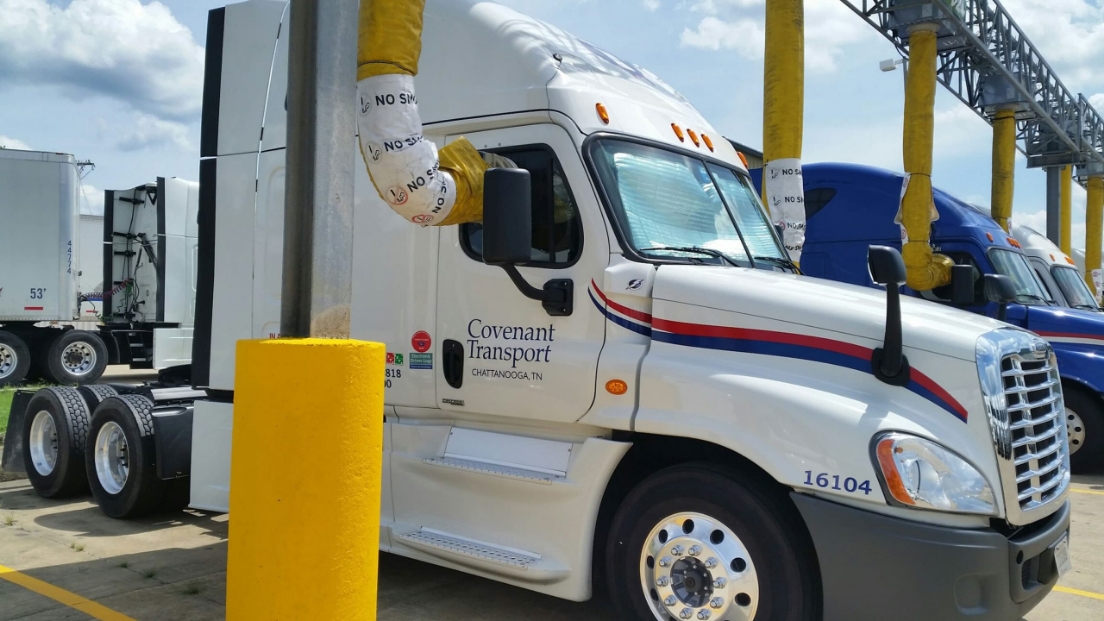
The ACR methodology for GHG Emission Reductions through Truck Stop Electrification is inactive and ineligible for crediting projects on ACR. ACR has determined that the methodology requires updates to be consistent with the current version of the ACR Standard.
Read more
This methodology is applicable to projects that result in a reduction in direct GHG emissions from diesel engine idling of long-haul trucks, through the installation and use of single-system Truck Stop Electrification (TSE) technologies.
TSE systems eligible under this methodology must use grid-connected electrical power, and must operate with the truck’s main propulsion (diesel) engine fully shut off. The methodology is currently only applicable in the United States due to its use of U.S.-specific references and emission factors. Baseline emissions from diesel idling are calculated using California Air Resources Board emission factors, and project emissions from electricity generation are calculated using USEPA eGRID factors.
This methodology was developed by ACR in collaboration with IdleAir, and approved through ACR’s public consultation and scientific peer review process.
Destruction of Ozone Depleting Substances and High-GWP Foam

Share
ACR has published version 2.0 of the Methodology for the Quantification, Monitoring, Reporting and Verification of Greenhouse Gas (GHG) Emission Reductions from the Destruction of Ozone Depleting Substances (ODS) and High-Global Warming Potential (GWP) Foam.
Read more
This methodology supports high-integrity projects that destroy extremely potent ODS and High-GWP foam, which are more harmful than CO2 for the climate. Version 1.0 of the ACR Methodology updated and expanded the California Air Resources Board (ARB) ODS Compliance Offset Protocol that was first adopted for use in the State’s cap-and-trade program in 2011 and was subsequently revised in 2014. ACR has now updated this methodology to version 2.0 and includes changes summarized in the “Version 2.0 Summary of Changes” provided below. Additional information on the methodology updates is also available in the “Version 2.0 Public Comments” and “Version 2.0 Peer Review Responses” provided below.
Chloroflourocarbons (CFCs), hydrochlorofluorocarbons (HCFCs), and High-GWP hydrochlorocarbons (HFCs) are used as coolants in refrigeration and air conditioning systems, propellants in aerosol sprays and medical devices, fire-suppressants, solvents, and foam blowing agents for the manufacture of insulation and noise reduction in buildings, appliances, coolers, marine applications and industrial pipe insulation. CFCs and HCFCs are classified as Ozone Depleting Substances (ODS) because they deplete the stratospheric ozone layer, and they have extremely high GWPs, ranging from 4,750 to 10,900 more potent than CO2. Many ODSs and HFCs are also “short-lived climate pollutants” (SLCPs) that trap heat at much higher rate (than their GWP-100 values) in the first few decades of release.
Under the Montreal Protocol, the production of CFC refrigerants in the U.S. is phased out and the production of HCFCs was also phased out starting 2020. Under the Kigali Amendment to the Montreal Protocol, phase down of production of HFCs has already begun in the US, Canada and other developed countries. However, the use of these ODS is not prohibited, and standard practice is to recycle the ODS for reuse. This practice leads to ODS leaking into the atmosphere at rates estimated by the EPA to be up to 25 percent annually.
The ACR Methodology provides a framework for the quantification, monitoring, reporting and verification of GHG gas emission reductions associated with the sourcing and destruction in the U.S. (including territories) and Canada of: 1) High global warming potential (GWP) ODS sourced from air conditioning and refrigeration equipment, medical aerosol applications, fire suppressants, and solvents; 2) High-GWP foam blowing agents that are extracted from insulation foam; and 3) Insulation foam that contains blowing agent(s) with high GWP.
ACR is an internationally recognized carbon crediting program that operates in global compliance and voluntary carbon markets. A nonprofit enterprise of Winrock International, ACR was founded in 1996 as the first private greenhouse gas (GHG) registry in the world with the mission of harnessing the power of markets to improve the environment.