
ACR Expands Eligible Sources and Storage in Update to Carbon Capture and Storage Methodology


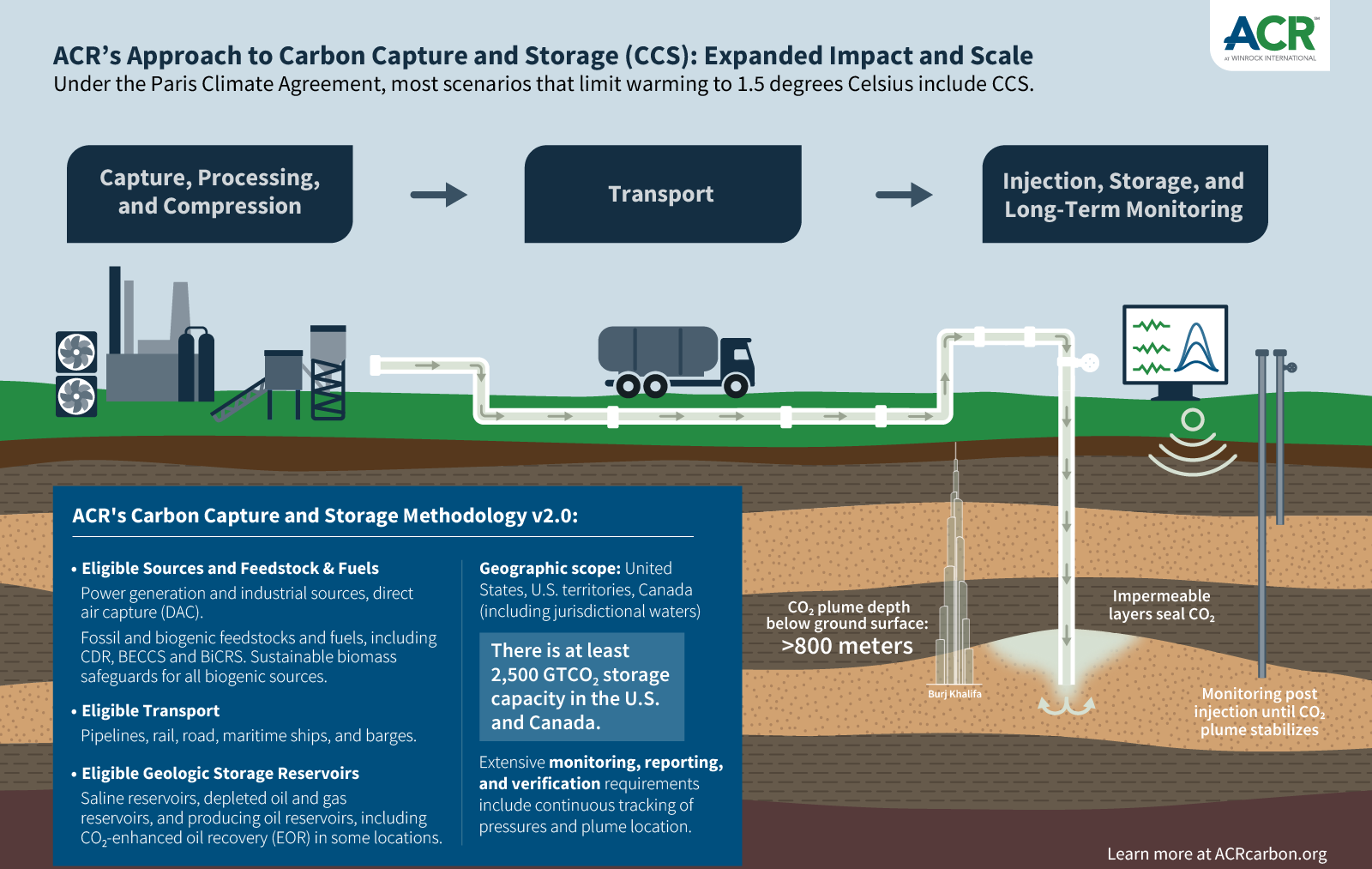
Version 2.0 expands eligibility for geologic storage to include saline reservoirs and depleted oil and gas reservoirs and extends eligibility for CO2 sources to include biogenic and direct air capture sources.
LITTLE ROCK—ACR has published version 2.0 of its Carbon Capture and Storage (CCS) methodology, which significantly increases opportunities to incentivize CCS in the United States and Canada.
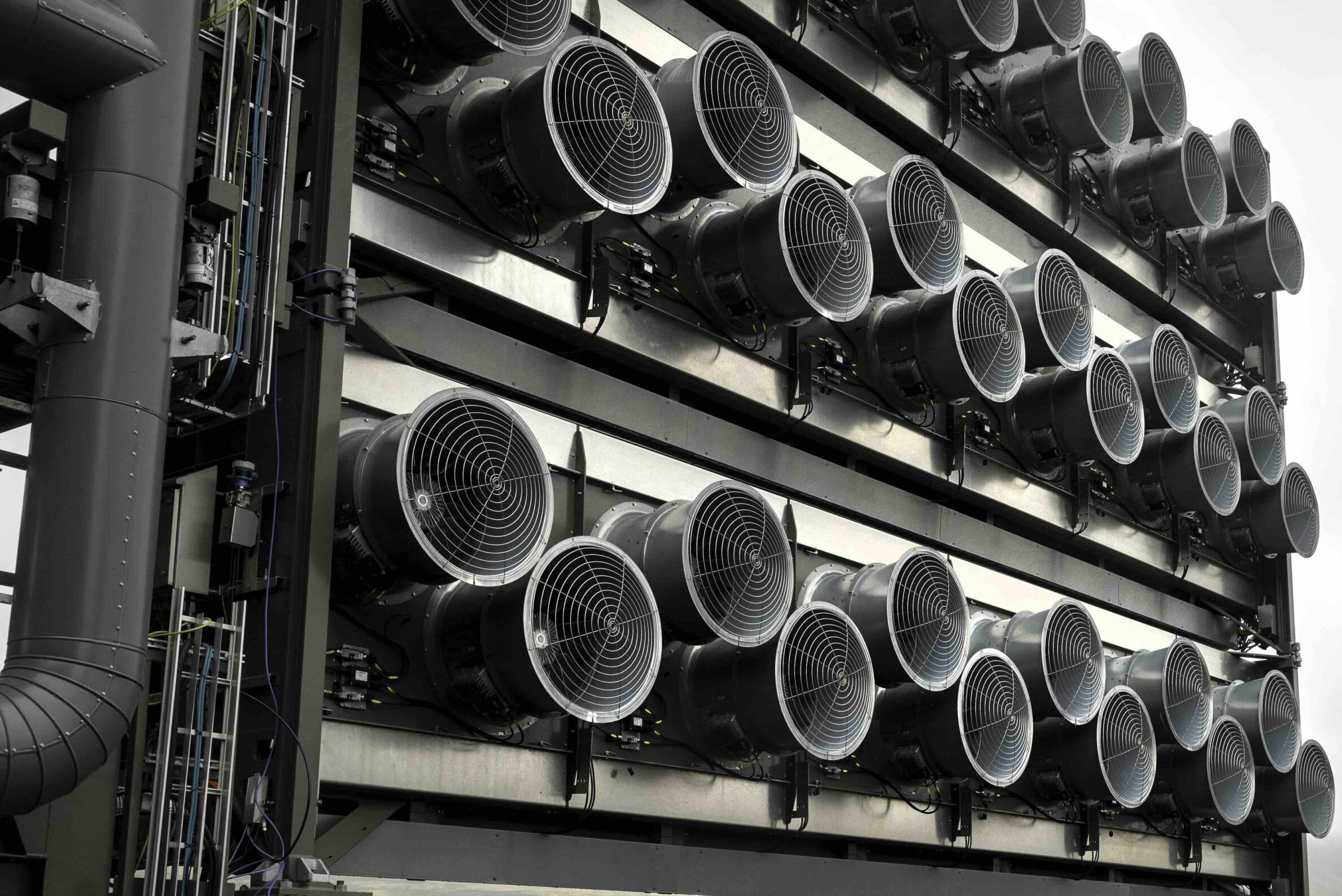
The updated ACR methodology expands eligible geologic storage reservoirs to include saline reservoirs and depleted oil and gas reservoirs, enabling projects in significantly more geographic regions and leading to much greater storage capacity. ACR also extended CO2 source eligibility from fossil fuel-derived sources to include carbon dioxide removal (CDR) through direct air capture (DAC), bioenergy with carbon capture and storage (BECCS), and biomass with carbon removal and storage (BiCRS).
All biogenic sources of CO2 must meet the methodology’s requirements for sustainable biomass, meaning that the biomass sourcing itself must not contribute to climate change and environmental degradation. This biomass must be grown, produced, harvested, or otherwise sourced from within the United States or Canada.
The methodology, which can generate both emission reductions and removals credits, is eligible for use in the United States and Canada, where storage reservoir capacity is estimated at between 2,500 and 20,000 billion metric tons CO2, with the highest capacity in saline reservoirs.
“CCS offers a practical, high-integrity way to reduce greenhouse gas emissions from hard-to-decarbonize sectors such cement and steel, and from other industrial and electricity generation sources” said Mary Jane Coombs, ACR Director of Industrial Programs. “Under the Paris Climate Agreement, all scenarios that limit warming to 1.5 degrees Celsius include CCS due to the need for rapid and deep emission reductions across all sectors.”
While the Methodology for the Quantification, Monitoring, Reporting and Verification of Greenhouse Gas Emission Reductions and Removals from Carbon Capture and Storage Projects (Version 2.0) includes substantial revisions throughout, the following are key changes:
- The methodology aligns with the highest standards of rigor for monitoring, reporting, and verification (MRV) of geologic CO2 storage. Its MRV framework requirements parallel the stringent expectations of the U.S. EPA Class VI and Section 45Q programs, applying comparable requirements to all projects regardless of jurisdiction or permit type or class to ensure consistent and comparable oversight of CO2 storage activities.
- Fossil and biogenic CO2 sources are both eligible in the methodology, including CDR, DAC, BECCS, and BiCRS. Sustainable biomass safeguards are added for all biogenic sources of CO2.
- Storage in saline reservoirs, depleted oil and gas reservoirs, and producing oil reservoirs (with CO2-enhanced oil recovery) is eligible.
- Crediting periods are 12 to 15 years long, depending on the CO2 source and geologic storage reservoir. Non-EOR projects can renew their crediting periods and CO2-EOR projects are non-renewable.
ACR has the only active and published CCS methodology that allows for CO2 storage through CO2-EOR projects. The updated methodology includes new and enhanced accounting for generating carbon credits from CO2-EOR, requiring projects to account for the production, transport, processing, refining, and end-use emissions of the oil and associated gas produced.
All CCS projects using version 2.0 of the ACR CCS methodology are required to develop – and have validated and verified – MRV Plans that are consistent with U.S. EPA Class VI (geologic sequestration of CO2) Underground Injection Control permits. This allows project developers flexibility in permitting while ensuring that projects undergo rigorous site selection and monitoring to confirm the safe, permanent storage of CO2.
The methodology update was authored by ACR. It underwent independent peer review and a public comment period. Review the methodology here: https://acrcarbon.org/methodology/carbon-capture-and-storage-projects/
###